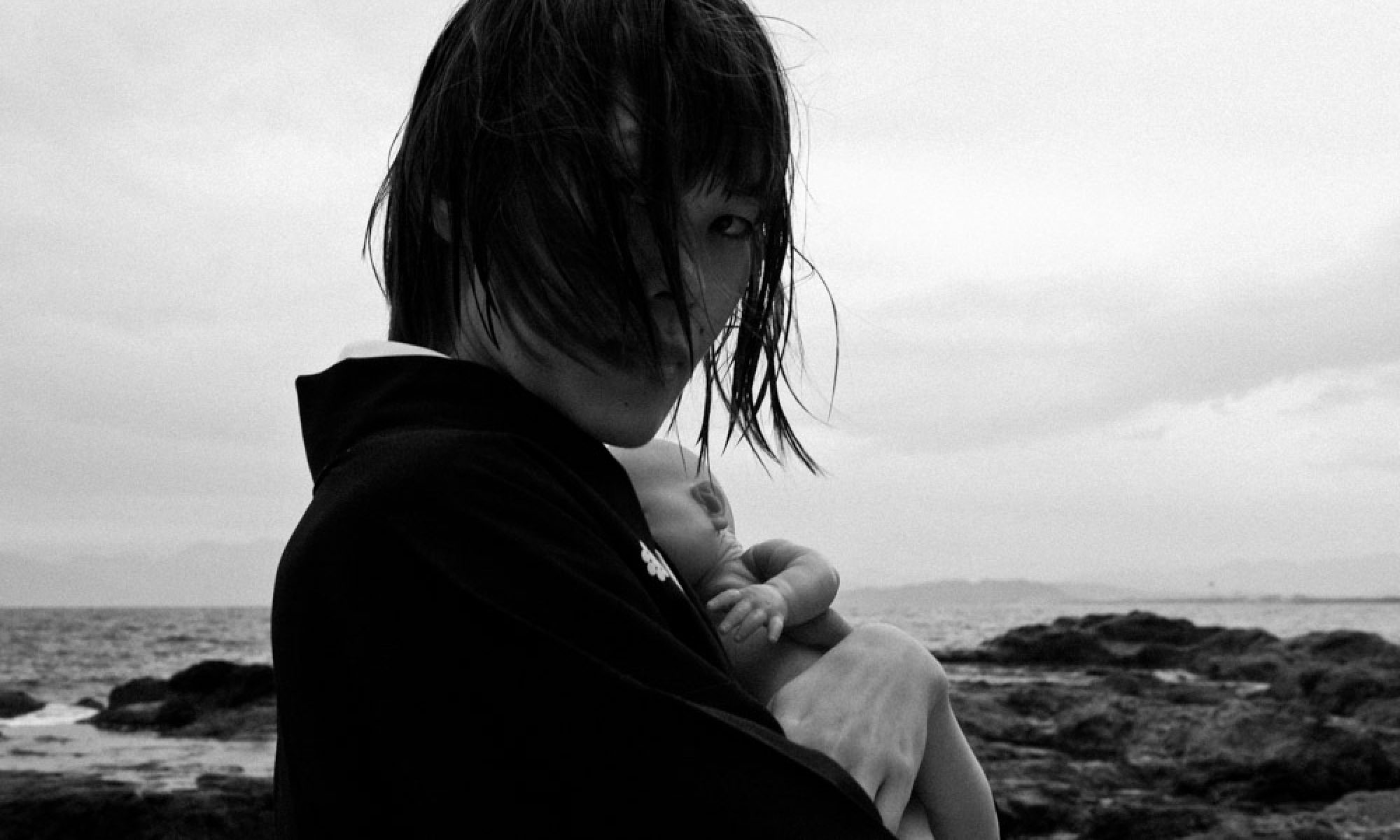
Maya Sinji Jung is a Korean born artist and photographer. Her works are highly respected in both Flickr and JPG Mag. I recently got in touch with her and made an interview with her over Skype.
Jaakko: How are you, and how is everything?
Sinji: It’s fantastic, it’s great. You know many things happened like for everyone else, but I think I’ve finally found kind of peace, in my family and in my island.. Many strange experiences, like temple stayings just came to my life, and things like that.. it’s getting good..
Jaakko: I saw your poem in JPG Mag. As many other readers, I thought it was very beautiful and unique. What inspired you to create it?
Sinji: It was actually my experience about a loss of a relationship, a very personal thing. I never really used my imagination for that and it was very natural for me to put my words and experiences into the poem. And then, I was thinking responsibilities, and lots of things which are connected..
Jaakko: And then you took those experiences and emotions and you created a beautiful art work out of that..
Sinji: I do all kinds of things, I sing and play piano, write and sometimes I paint.. When I was student I used to stay in library all day long.. taking photos used to be just a little thing for me.
But since I started relationship it became really really big, you know. I didn’t even expect it. And I always recorded myself to show and introduce myself to the person. And it begins like that actually, all of my photo activities, it started from that love accident, because I was ex-girlfriend of a photographer.
It (relationship) was a really big thing, you know, for me at least.. and then.. suddenly, like BOOM! It was gone! Last six months was really hard for me.. And I’m now I’m back in Korea, here in my home land. The poem I wrote was a kind of struggling with myself to identify who was I in that relationship and who am I in family and in this society.
Jaakko: Do you ever feel empty after creating a certain artwork?
Sinji: I’m always empty! (laugh) Actually, I never feel empty after I create some art work. And I thought “maybe I’m not artist” if I don’t feel empty after that.. (laugh) I feel empty before I make art work.
But you know, my emptiness and hunger could be the same like, shadow and a light. I’m very hungry for creating, and expressing the emptiness.
Jaakko: Does beauty equal pain?
Sinji: It could have something to do with emptiness and hunger and shadow and light.. But I don’t think that you have to be painful to create something beautiful, but..
I just saw a documentary film a few years ago about dragon fly, they stay, months or years under the water. They eat lots of things, and it looks really ugly, but it looks kind of struggling, looks painful.. to make their body grow. And I don’t know if they know that they will become dragonfly or not, but then they come out of the water, and take off their old clothes and put on new ones..
Jaakko: Responsibility is often the theme in your works. What do you think about responsibility of a human being?
Sinji: (Responsibility).. is to know, what kind of layers you are wearing. We can’t really ask someone to take them off; we are wearing those, whether we like or not. To recognize that fact, that actually I’m wearing this layer and that layer, and people call me blah blah blah in this society, and some people call me with another name .. so you know, just accept the layers and stand there; that itself could be the responsibility.
I actually took the photo, and made the title, because I had this argument inside of myself. Someone told me that I’m doing all my responsibility, but then I couldn’t see him doing his responsibility at all in my point of view. People think that responsibility is really something big or something like that.. And then that person is trying to wear someone else’s responsibility by talking and covering up himself. What I wanted to tell us was that we don’t have to speak about it, just accept ourselves in that space, where we are standing. The big stone doesn’t know why it is there….
Jaakko: That’s a very buddhist way of thinking..
Sinji: I’m not a buddhist! (Laughs) But I experienced the time in the temple.. and maybe my philosophy is influenced by buddhism, because it was my environment too in this country, and then actually one of my parents is a buddhist. It became part of my philosophy very naturally. Well, now I see I am a buddhist.
Jaakko: What do you think about Buddhist detachment?
Sinji: It’s the fear. You don’t want to be refused, or ignored, or misunderstood by others or those you call your friends. It’s all common sense for human beings. But the distance is always there, even with your very very best friend or parents, or whoever. The fear is always there.
But when I was in the temple, I was meditating and reading, and when I was doing that, I really focused in myself, to breath, sitting and reading sanskrit. I basically didn’t know what I was reading, but the monks gave me one page and told me to read it with my voice, following my breath.
The first day, I was just focusing on the letters and reading. And the second day, I started to think about, you know my business in my mind. And then I asked the monk “I heard that when you do this meditation, your unnecessary thoughts have to go away, but my mind is full of regrets and full of my plans, present and future.. because I’m just sitting here!”
Then the monk said “No problem! Just do what you do. The feelings and sadness will come to revisit you while you are reading, but just keep reading. Then the next step will come.”
And I did it.. for two days. Then I noticed while I’m reading, there are no thoughts. I might have thought occasionally the meaning of what I was reading, but actually there was nothing in my mind. I just focused on that moment and then those kind of distances between me, and my thoughts came. I felt there was really some big things going on. It was really huge experience. And then there was almost zero distance between me and others.
It might be impossible to get rid of the fear from our bodies, but if you try, maybe those little moments, will give you a kind of hint.
Jaakko: (about sadness..)
Sinji: .. in human world, where everyone’s struggling.. none of that sadness is bigger or smaller than the others. None of that can be compared. Your sadness is the biggest one for you, for me, mine is the biggest one in the world for me!
Jaakko: Yeah.. sometimes I get this feeling like “Come on, I don’t have a culture!”. Do you ever feel the same?
Sinji: You will never believe, but I know exactly what you’re speaking. You have blue eyes and white face and everyone can say you’re a white man from Europe or wherever, and then I’m Asian. We’re not mixed kids, you know, physically… So probably people will say “Oh, you have your Finnish culture, you have your Korean culture, you have your Asian culture”.
Since I was a kid I was ALWAYS a foreigner. Like “who you are?” was always the question. Whole through my life, I was a bit different.
People said to me always “oh, you’re little different”.
When I went to Japan, I really wanted to make sure that I’m treated the same as others, so I studied Japanese hard, until I mastered the language. But still, even after I had mastered Japanese, people treated me the same, they couldn’t accept “my culture”, which is made by my authentic ways, you know. Not so many people can truely accept and understand that all of us have their own culture. In that sense, I am trying to be an inter-cultural person: I am doing all my art work to share my culture with others, and hopefully it could make some kind of peaceful communication if you let me get in your world.
You can find Maya Sinji Jung’s work in Flickr: http://www.flickr.com/photos/mayasinjijung/
and in JPG Mag: http://jpgmag.com/people/mayacafe