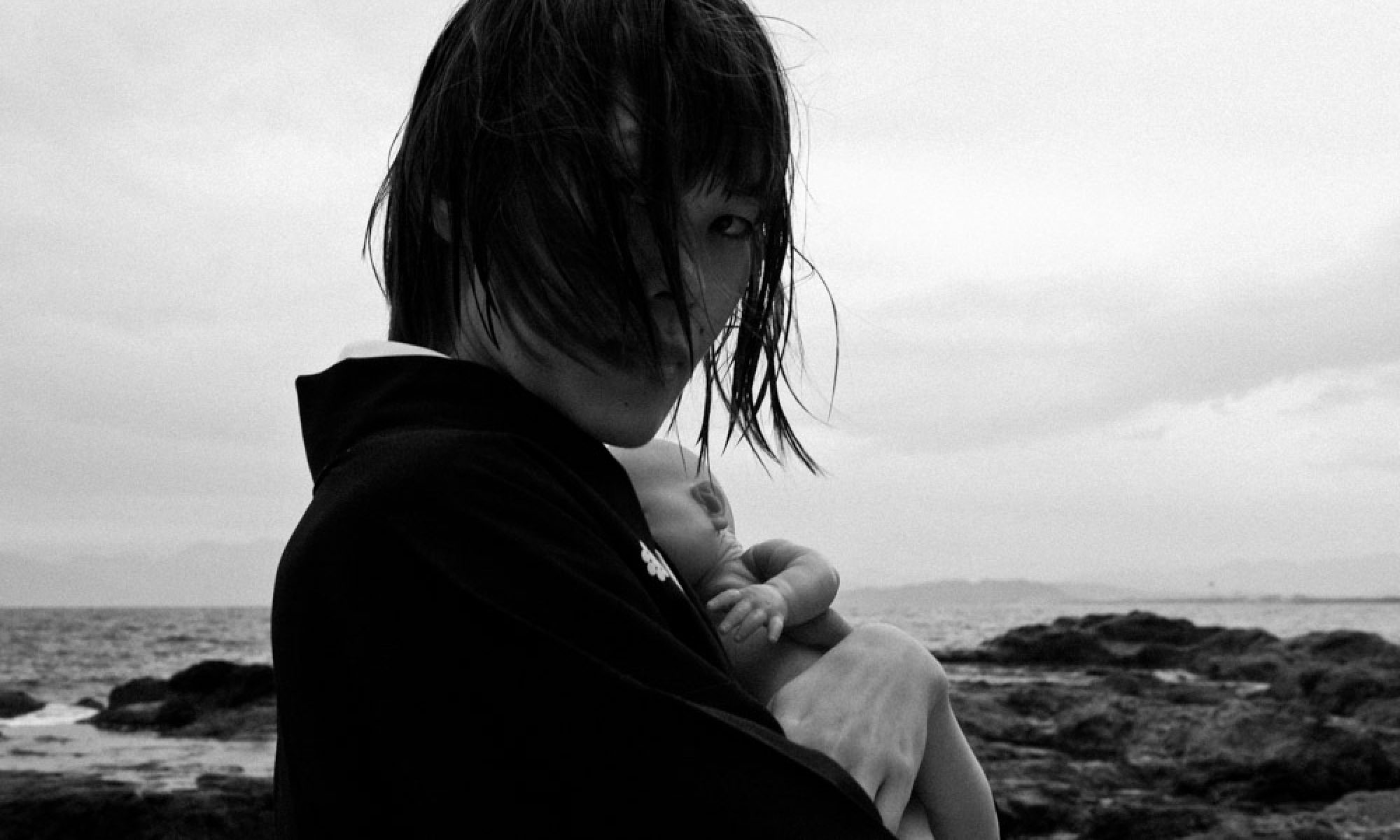
Lizard Point Vol.1 Shooting

I had great time shooting Lizard Point Vol.1 in Jogashima, Miura today. I really want to thank fantastic model Yuki and our videographer Paulo for making this possible. Without you guys this just wouldn’t have happened!

It was really such a pleasure to work with Yuki since she really understood my concept from the beginning. The way how she interpreted it was totally beautiful; in fact I felt even a bit shaken by the intensity of the emotions she was able to convey.

Indeed, I wish that my skill as a photographer was enough to capture this very powerful scene properly. I know I will have trouble sleeping until I see the developed negatives; But that’s how it always is when you are shooting film. You’re taking risk; and that’s what makes it so thrilling; that’s chemical reaction what’s going on there.

Losing Interest

These days I’m losing interest in cameras. Maybe it’s similar to a farmer who loses interest in his pitchfork?
Sure we got to know how the basics of using agricultural tools if we happen to be farmers. But farmer doesn’t wake up in the morning thinking of his shiny new pitchfork and spend his time polishing it, right?
Like the farmer dreams of the good harvest, photographer dreams of the perfect picture. The creation itself is simply the thing. It should be.
Indeed I feel sick about the capitalism that exists in the world of photography. Camera is nothing but a light-proof box. So use whatever you have!

Magnum Contact Sheets

I recently bought the latest edition of Magnum Contact Sheets (2011, Edited by Kristen Lubben). This (huge!) book is a landmark, perhaps one of the most important photography publications out there.

Contact sheet used to be a common tool for photographers when reviewing their work; it allowed photographers to see a quick overview of the images they had shot. This first draft reveals the thought process and work method of the photographer since the original sequence of the exposed film is preserved.

Indeed, contact print is something intimate that photographers are not usually willing to show. Quoting Henri Cartier-Bresson (from page 18), “A contact sheet is full of erasures, full of detritus”, and that “A photo exhibition or a book is an invitation to a meal, and it’s not customary to make guests poke their noses into the pots and pans, and even less into the buckets or peelings..”.

I wasn’t particularly interested in seeing the mistakes of other photographers, but more I wanted to see the flow of images that existed in original film, I find there is something very beautiful and human in the process and how the mind of the photographer works. A perfect marriage of the analog workflow and human subject..

The book starts with iconic images of Cartier-Bresson in Seville in 1933, and chronologically walks the reader through the century of great photographic culture into the present day. The written stories and descriptions by the photographers themselves are fascinating to read; here are many amazing, moving stories here. I am especially touched about description of Marilyn Silverstone’s life, she was the only woman photographer to record Dalai Lama’s arrival to India in 1959 and became Tibetan Buddhist nun in the later years.

And then there is the iconic picture of the lone protestor in Tiananmen Square.

But Magnum Contact Sheets is not only a record of famous images with historical importance, it’s a record of the art itself. On the latter pages there are even video stills, and screen shots of the thumbnail images on computer screen.

It will be interesting to see how this book will develop in future as more and more photographers switch to digital.

I really recommend this book to anyone interested in photography or the human subject.

Police Work

I love Leonard Freed’s comment regarding his contact sheets in Magnum Contact Sheets “Police Work”:

“Contact sheets are mostly a waste of money, I find. 99.9 per cent of the frames on the contact sheet are mistakes one makes while photographing. Because it is a waste of money, I love them. There are things in life we must do just because we find them unprofitable”.

I couldn’t agree more.


Marking the Way

Saito Hisao’s article “Marking the Way” in latest Yokohama Seasider moved me. The people I’ve met in Dark Room Intl. never seize to surprise and humble me. Like Mr. Saito said in his article, some of us beginner photographers are lost, and some don’t even see that they are lost. Myself I know certainly how lost I am, so I think in that sense I’m lucky; I know I’m standing somewhere, but don’t quite know where, and that’s really terrible, huge problem for me.
I certainly, deeply hope that instructors in NYIP are honest and make their best effort to show me my location, like a GPS satellite. I can draw my own roadmap but in order to do that, I need to know my coordinates.

My Kind of Image

You know the word  “utsukushii” 美しい , in Japanese. The word is composed of Chinese letter that has a component of sheep.

I love this word. It’s as lovely and big as music of Vangelis, it’s innocent and pure like a white sheep lying down on green meadow. It is a word I want to use to describe women, the wonderful creatures who live on this planet despite it’s horrors.

I have always believed in feminine aspect of humans, even men are kind of women, you know, kind of like ocean. Like Björk would sing in her song Mutual Core, perhaps the planet itself is feminine, trying to manage the tectonic plates to counteract distance..

Our beautiful, beautiful, feminine planet..

Yes, I think Japan needs more mature imagery of femininity; and I predict that advertising machine in Japan is going to change to reflect the need. I think I’m speaking for everyone if I say; we are crying and dying for something more spiritual. The need is there and it’s huge.

I would like to be there when the change happens.

Interview with Mattias Leppäniemi

I saw interview of Mattias in Youtube channel of Eric Kim. Soon after that, I decided to contact Mattias and ask for his interview which he kindly granted.

When did you discover photography? Was there a moment in your childhood or adolescence when you discovered that you love taking photos?

I’m a really late bloomer. I actually got my first camera as late as 2006. But visual imagery has always played big part in my life as I studied design and worked as a graphic designer.

In your photos, one can sense solitude or a kind of loneliness. Tell me a little about this and capturing that unique atmosphere.

It is true, at first it was an unconscious decision. But after looking at my work I really found that it reflects me as a person and now it is a very conscious decision in my photography.

How did you meet Eric Kim? Tell me your first impression about him.

I met Eric in Tokyo. I attended a workshop in there that Eric had together with Charlie Kirk, Bellamy Hunt and Afie Goodrich. My first impressions of Eric is that he is a super nice guy, full of energy.

He is a quite unique person, he loves sharing knowledge and is kind of like a Energizer Bunny :D. My friend Brian (Sparks) calls him “Eric Machine”.

This spring I invited him over to Stockholm to hold a four day workshop here, and it all went well. I do not know of anybody who have met him in real life that does not like him. He is a top man!

Tell me about capturing the beautiful photo of Linnea.

I was out shooting with Eric and we talked a lot about projects and the importance of shooting and working in projects. I am currently working on a project with the working title “The Elderly”.

And as we were walking I spotted here from a distance and knew right away I had to include her in the project. So I approached her and started talking to her and asked if I could take her picture. She agreed and I took a total of six shot of her and they where all pretty good.

The amazing thing was afterwards when she told me that I had made her day. It felt really good and totally made my day as well.

How was your trip to Tokyo? Do you intend to return here?

My trip to Tokyo was totally amazing. I love Tokyo! My only regret is not staying longer. I made a lot of new friends and I have every intention on going back as soon as I can.

Many photographers have great images but find arranging them into a sequence very difficult task. Would you have any idea on how to make the process easier?

No, it IS REALLY hard. But my general advice would be to her very hard in your edit and let the edit take bit of time. Also get input from people you trust, and get the input in person not on Flickr. I do not think that feedback on the internet is very useful if you really want to know what people think.

And if you have a set of images I think it is generally good to let some time pass from the actual shooting to the editing. You need time to detach yourself from the emotion that you had when you took the picture. Sometimes that emotion is preventing you from seeing if the picture is good or not.

This emotional attachment is very interesting and quite common with photographers. Do you believe detachment would help? If so, how to achieve detachment during shoot of emotional subject?

I think detachment is important in Street Photography. I´m not sure about other genres. But when it comes to Street Photography, you have to detach your self from your pictures. It helps you being a better editor of your work but it is really hard.

The emotion you feel when you raise the camera and dare to shoot a stranger you never have met before is quite satisfying (or even horrifying), sometimes that feeling and your memory of the moment can be so strong that when you look at the picture, all you feel is that feeling. And that can sometimes cloud the judgment of the actual picture.

In these “Flickr-fav-Explore”-times you can really feel the pressure to get instant feedback, and you quickly upload and just wait for the comments to roll in on your “amazing” picture… And sometimes when you look back on your old pictures you can see that the picture is sometimes not as good as you remembered it to be.

There are some ways of “helping” your self to let your pictures digest. One is to work in time based projects and not look at the pictures at all until the timeframe has passed. Another way is to shoot with film, although it does not suit everybody.

What photo books would you recommend to a person who has no photo books?

I would definitely recommend Robert Franks “The Americans” It is a classic regarding to editing and sequencing a project. It is one of my favorite books.

Thank you Mattias! You can find more about Mattias in his website:
http://longtallswede.com

Nakashima Hiroki: Land of Smiles

Yesterday I went to see Nakashima Hiroki’s photo exhibition Land of Smiles in Gallery NIW in Tokyo. I met the photographer in Dark Room Intl. in Yokohama before and had chance to see his work.

Land of Smiles is a collection of candid street portraits took in Thailand.

The portraits show natural connection between the photographer and the subject, and that, according to Nakashima is his purpose. The people looked at ease in their natural poses; the photos didn’t seem to be taken by a traveler, but someone local. Not a small achievement.

The sequencing of the photos as well as the technical quality of the photos were excellent, and show the obvious experience and skill of the photographer. I would also imagine Nakashima’s choice of the media, film instead of digital, is very conscious one.

Overall, the portraits had great variety and all of them had something special. In all of the photos the subjects seemed relaxed and at ease.

After I returned, it occurred to me that perhaps it was the last photo that gave me the final impact, the beautiful young woman dressed in white. The photo had a hint of sadness in it, what I especially liked, a photo that stood out from the others.

Without it, the smiles in the rest of photos might have lost their purpose. The sequencing is very important in any exhibition and the way how Nakashima organized his photos really made them shine, a skill what is only learned by doing.

Land of Smiles is a wonderful work of a human subject.

Visit Gallery NIW until 6/19.

Misao the Big Mama and Fukumaru the Cat

Yesterday, I found Miyoko Ihara’s photo book “Misao the Big Mama and Fukumaru the Cat”. The photos are unique and heartwarming; I can feel the photographer’s intention clearly; the human connection between the cat and grandma.

In her website she says:

“My grandmother and her cat are always together. This is the photobook captured the everyday life of my grandmother, Misa who bends her self to the fields work with her cat Fukumaru.”

What especially delighted me about this book is what I call a kind of artistic honesty; Ihara doesn’t try to be artistic, the photos are simple captures of real life events, but are exactly that in creative and artistic way. Ihara’s framing and selection of subject feels very profound and honest; it must be the result of her years in Nippon Photography Institute that took her to this level.

Although I understand why some of the photos might be criticized as being a kind of cute, the meaning behind the photos is clear; they are honest description of human connection. Fukumaru is very unique, odd-eyed cat and his partner and the 87 years old grandmother whose eyes show experience of life are naturally suited to each other.

The life of this couple is well captured in their green, lush environment.

It’s remarkable what the photos show if you take a moment to really look at them. Sure they are cute photos, but they are also much more. It is unclear to me at this point whether the photos were taken digitally or with film camera, but in any case, the print is excellent with very rich and saturated colors.

Especially I was moved about the second last photo, a rainbow captured in a very beautiful way.

I highly recommend this photo book to anyone interested in photography.

Find out more about the photo book in:
http://www.littlemore.co.jp/enstore/products/detail.php?product_id=357