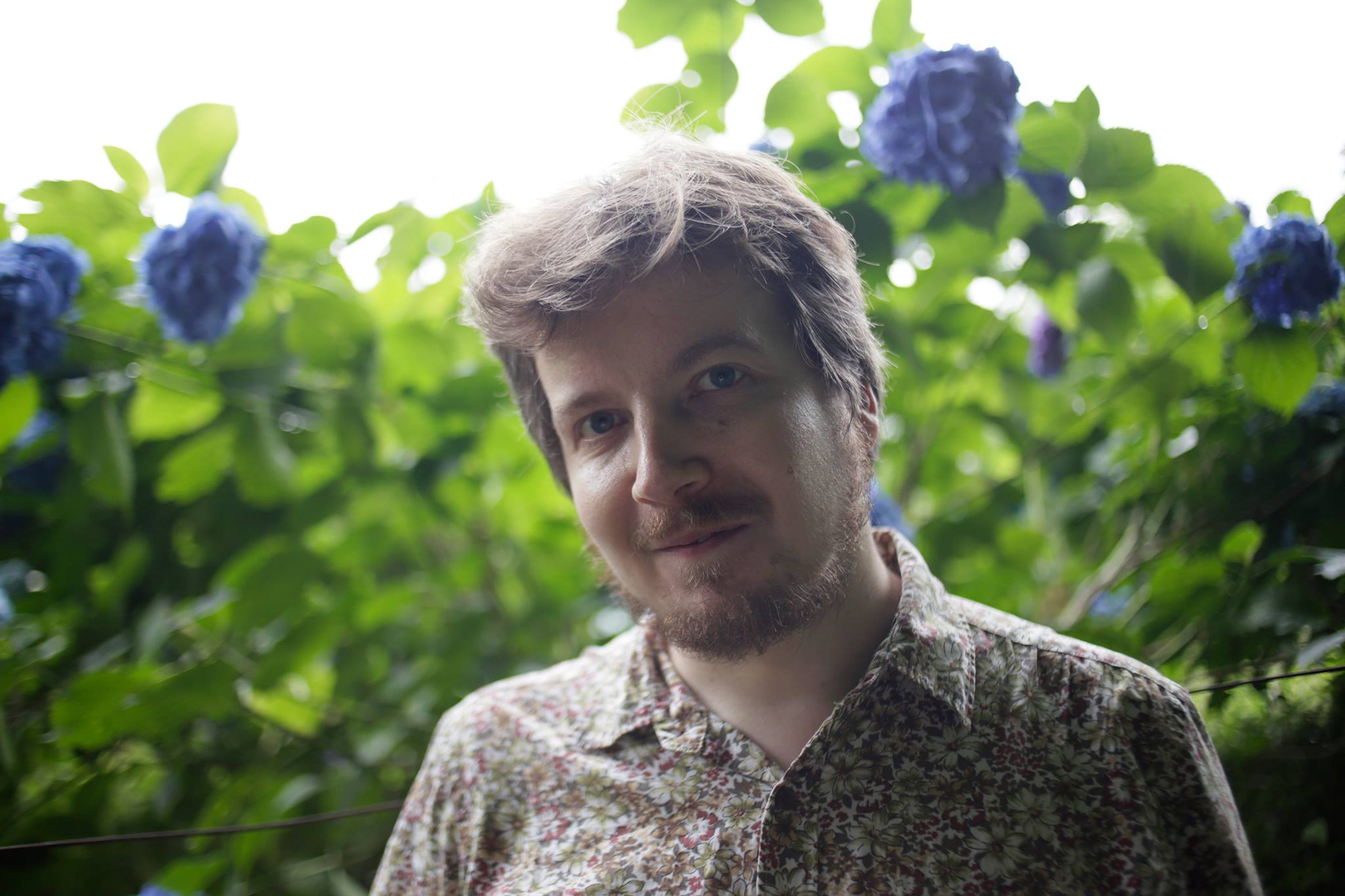
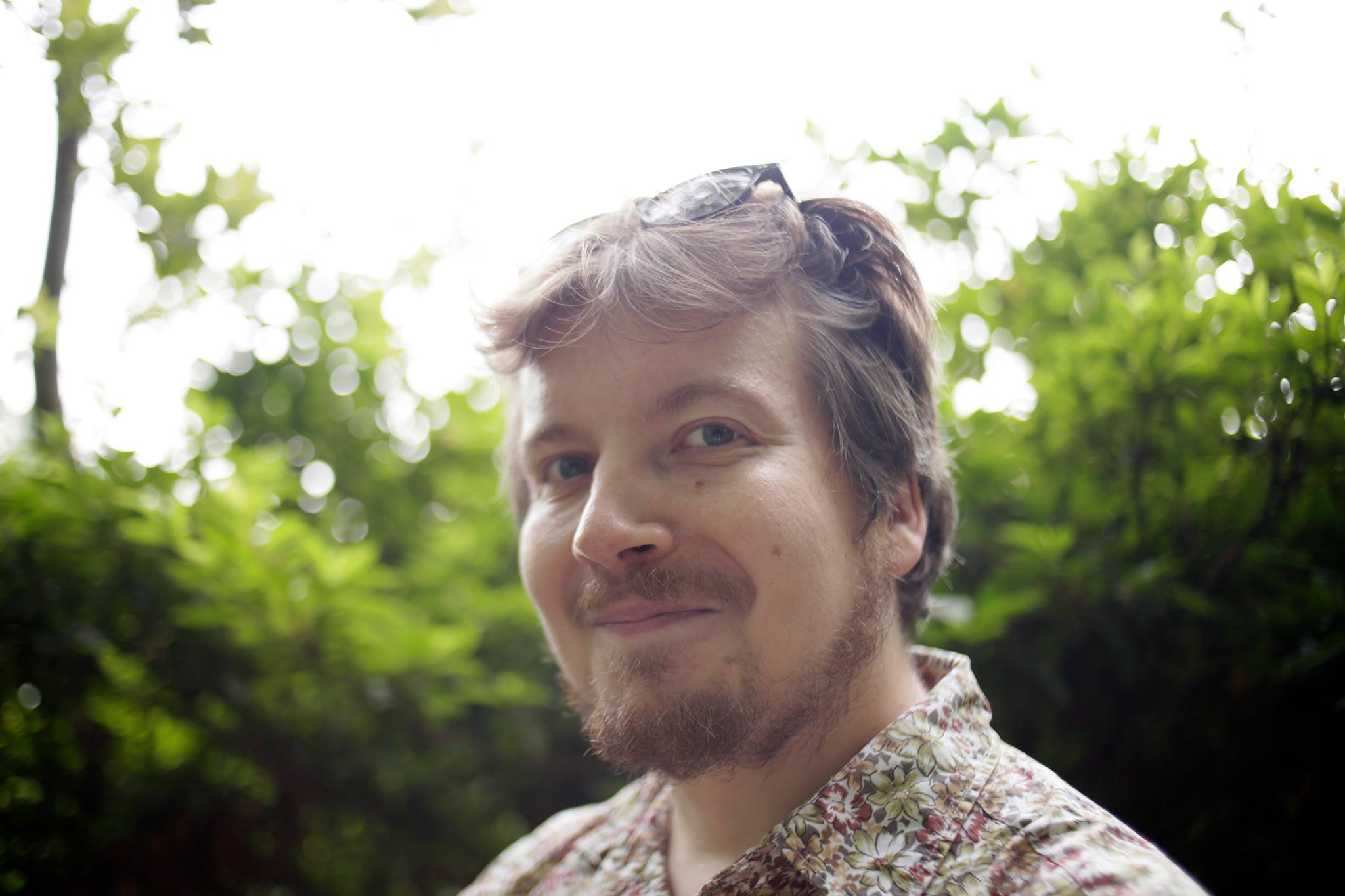
I spent a good day with a photographer Kayo Yamaguchi . She took my photo. It was a good experience to be in front of her camera. Her attitude and manner really moved me.
Photography is like a silent conversation.
Photos by Kayo Yamaguchi
Because all what we have is now
I spent a good day with a photographer Kayo Yamaguchi . She took my photo. It was a good experience to be in front of her camera. Her attitude and manner really moved me.
Photography is like a silent conversation.
Photos by Kayo Yamaguchi
facebookのプロフィール写真撮ります。
リラックスした、自然な表情の写真は任せてください。
スタジオでの撮影も、公園や森の中など屋外での撮影も大丈夫です。
東京・横浜エリアで受け付けています。
料金(税込)10,000円
I can shoot interesting Facebook profile photo of you, in environment which you prefer, such as forest, indoors or in studio. In my photo, people have natural, relaxed look. I am available to work in Tokyo / Yokohama area.
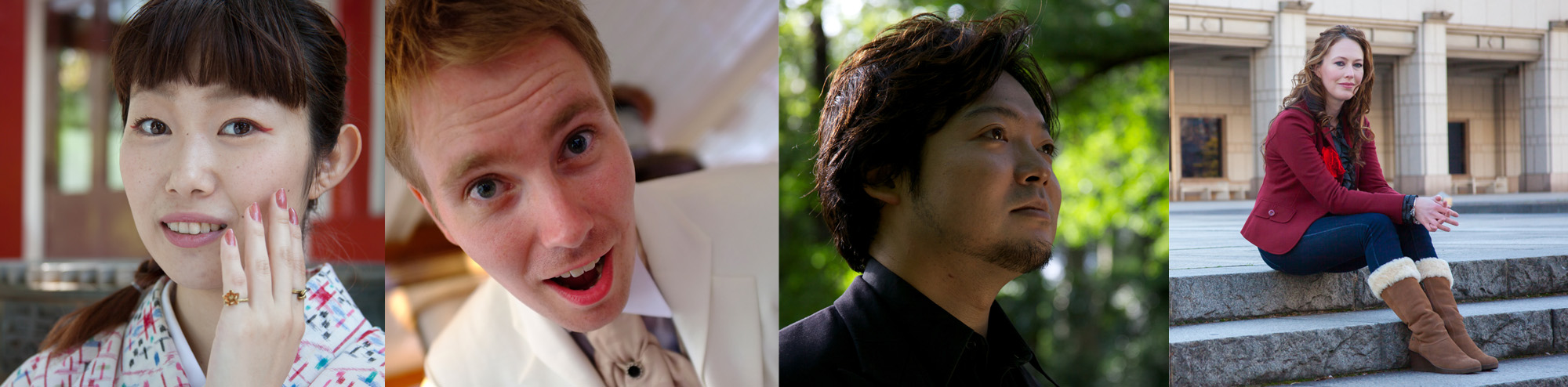
The cost starts from 円10,000 (incl. tax.)
I find Susan Sontag’s words healing in some strange way, in this chapter she writes about photos of Arbus,
“According to Reich, the masochist’s taste for pain does not spring from a love of pain but from the hope of procuring, by means of pain, a strong sensation; those handicapped by emotional or sensory analgesia only prefer pain to not feeling anything at all.”
It could be argued that photographers seek connection to the world through their photos, great photographers often have had some traumatic event in some point of their lives, after which they find it difficult to connect to the world same way as other people can normally. Ordinary days feel so alien to us..
Photographs may become a way for people to feel something, but it’s at the same time, looking photographs also anesthetize.
Photography can be a way of ultimate cure, entire lifestyle which is built on supporting and protecting the artist’s soul. And at the same time, moments recorded on photographic paper turn into dust, photos themselves fade and disappear, and people forget them. Life is fragile like a piece of paper, other side being death, it takes a faint breeze of dust to flip it around, unexposed image becomes exposed.
Yet, recorded evidence of life makes somehow everything seem less painful, even though actually it might worsen the pain itself in form of nostalgia.
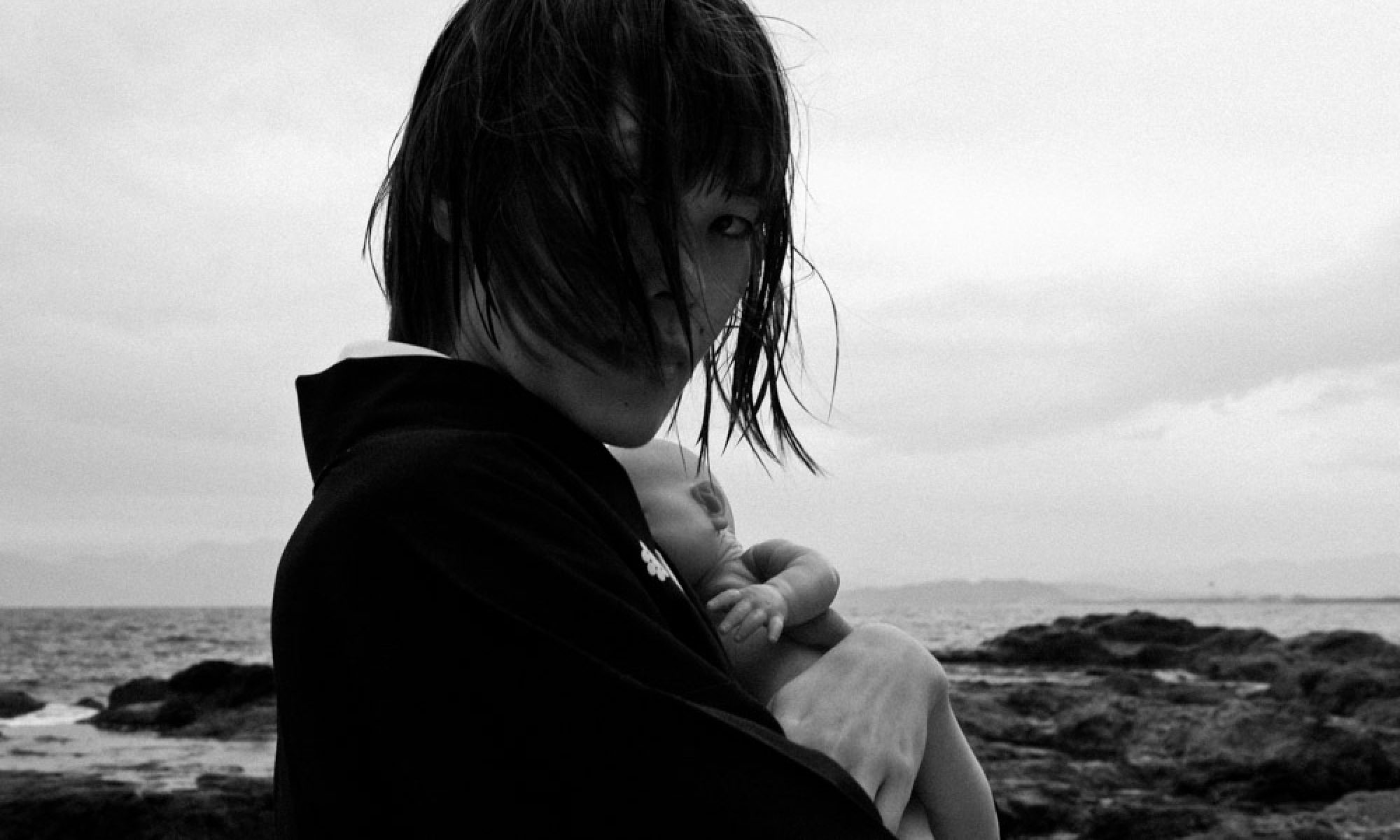
Here is one more shots from my session with photographer Masashi Furuka.
© Masashi Furuka 2013
Finnish Embassy linked to my exhibition in their culture calendar. Thank you! It looks like I’m in good company..
Past years I have had a series of business cards, all featuring my “birdie” logo. The previous versions of my business card have titled me as “visualist”, a general word that refers to my visual work in broader sense, mostly of course web design, 3D graphics and such. It could be even said that “visualist” do video, which I have done, although not quite enough.
However, since I have ran out of my business cards, it’s time to make a new one. I thought I will just go ahead and write “photographer” in it. Honestly, I am somehow a bit ashamed to call myself as photographer since I still feel I’m a total beginner. Even in formal sense, I’m just a photography student at the moment.
But it wouldn’t make much sense to write “student of photography” to the business card, now wouldn’t there?
I solve this dilemma by admitting that I will never be quite finished with my studies, any real photographer would say so about their own career as well; it’s a journey. So I hope you’ll forgive me.
Saito Hisao’s article “Marking the Way” in latest Yokohama Seasider moved me. The people I’ve met in Dark Room Intl. never seize to surprise and humble me. Like Mr. Saito said in his article, some of us beginner photographers are lost, and some don’t even see that they are lost. Myself I know certainly how lost I am, so I think in that sense I’m lucky; I know I’m standing somewhere, but don’t quite know where, and that’s really terrible, huge problem for me.
I certainly, deeply hope that instructors in NYIP are honest and make their best effort to show me my location, like a GPS satellite. I can draw my own roadmap but in order to do that, I need to know my coordinates.
I saw interview of Mattias in Youtube channel of Eric Kim. Soon after that, I decided to contact Mattias and ask for his interview which he kindly granted.
When did you discover photography? Was there a moment in your childhood or adolescence when you discovered that you love taking photos?
I’m a really late bloomer. I actually got my first camera as late as 2006. But visual imagery has always played big part in my life as I studied design and worked as a graphic designer.
In your photos, one can sense solitude or a kind of loneliness. Tell me a little about this and capturing that unique atmosphere.
It is true, at first it was an unconscious decision. But after looking at my work I really found that it reflects me as a person and now it is a very conscious decision in my photography.
How did you meet Eric Kim? Tell me your first impression about him.
I met Eric in Tokyo. I attended a workshop in there that Eric had together with Charlie Kirk, Bellamy Hunt and Afie Goodrich. My first impressions of Eric is that he is a super nice guy, full of energy.
He is a quite unique person, he loves sharing knowledge and is kind of like a Energizer Bunny :D. My friend Brian (Sparks) calls him “Eric Machine”.
This spring I invited him over to Stockholm to hold a four day workshop here, and it all went well. I do not know of anybody who have met him in real life that does not like him. He is a top man!
Tell me about capturing the beautiful photo of Linnea.
I was out shooting with Eric and we talked a lot about projects and the importance of shooting and working in projects. I am currently working on a project with the working title “The Elderly”.
And as we were walking I spotted here from a distance and knew right away I had to include her in the project. So I approached her and started talking to her and asked if I could take her picture. She agreed and I took a total of six shot of her and they where all pretty good.
The amazing thing was afterwards when she told me that I had made her day. It felt really good and totally made my day as well.
How was your trip to Tokyo? Do you intend to return here?
My trip to Tokyo was totally amazing. I love Tokyo! My only regret is not staying longer. I made a lot of new friends and I have every intention on going back as soon as I can.
Many photographers have great images but find arranging them into a sequence very difficult task. Would you have any idea on how to make the process easier?
No, it IS REALLY hard. But my general advice would be to her very hard in your edit and let the edit take bit of time. Also get input from people you trust, and get the input in person not on Flickr. I do not think that feedback on the internet is very useful if you really want to know what people think.
And if you have a set of images I think it is generally good to let some time pass from the actual shooting to the editing. You need time to detach yourself from the emotion that you had when you took the picture. Sometimes that emotion is preventing you from seeing if the picture is good or not.
This emotional attachment is very interesting and quite common with photographers. Do you believe detachment would help? If so, how to achieve detachment during shoot of emotional subject?
I think detachment is important in Street Photography. I´m not sure about other genres. But when it comes to Street Photography, you have to detach your self from your pictures. It helps you being a better editor of your work but it is really hard.
The emotion you feel when you raise the camera and dare to shoot a stranger you never have met before is quite satisfying (or even horrifying), sometimes that feeling and your memory of the moment can be so strong that when you look at the picture, all you feel is that feeling. And that can sometimes cloud the judgment of the actual picture.
In these “Flickr-fav-Explore”-times you can really feel the pressure to get instant feedback, and you quickly upload and just wait for the comments to roll in on your “amazing” picture… And sometimes when you look back on your old pictures you can see that the picture is sometimes not as good as you remembered it to be.
There are some ways of “helping” your self to let your pictures digest. One is to work in time based projects and not look at the pictures at all until the timeframe has passed. Another way is to shoot with film, although it does not suit everybody.
What photo books would you recommend to a person who has no photo books?
I would definitely recommend Robert Franks “The Americans” It is a classic regarding to editing and sequencing a project. It is one of my favorite books.
Thank you Mattias! You can find more about Mattias in his website:
http://longtallswede.com

Maya Sinji Jung is a Korean born artist and photographer. Her works are highly respected in both Flickr and JPG Mag. I recently got in touch with her and made an interview with her over Skype.
Jaakko: How are you, and how is everything?
Sinji: It’s fantastic, it’s great. You know many things happened like for everyone else, but I think I’ve finally found kind of peace, in my family and in my island.. Many strange experiences, like temple stayings just came to my life, and things like that.. it’s getting good..
Jaakko: I saw your poem in JPG Mag. As many other readers, I thought it was very beautiful and unique. What inspired you to create it?
Sinji: It was actually my experience about a loss of a relationship, a very personal thing. I never really used my imagination for that and it was very natural for me to put my words and experiences into the poem. And then, I was thinking responsibilities, and lots of things which are connected..
Jaakko: And then you took those experiences and emotions and you created a beautiful art work out of that..
Sinji: I do all kinds of things, I sing and play piano, write and sometimes I paint.. When I was student I used to stay in library all day long.. taking photos used to be just a little thing for me.
But since I started relationship it became really really big, you know. I didn’t even expect it. And I always recorded myself to show and introduce myself to the person. And it begins like that actually, all of my photo activities, it started from that love accident, because I was ex-girlfriend of a photographer.
It (relationship) was a really big thing, you know, for me at least.. and then.. suddenly, like BOOM! It was gone! Last six months was really hard for me.. And I’m now I’m back in Korea, here in my home land. The poem I wrote was a kind of struggling with myself to identify who was I in that relationship and who am I in family and in this society.
Jaakko: Do you ever feel empty after creating a certain artwork?
Sinji: I’m always empty! (laugh) Actually, I never feel empty after I create some art work. And I thought “maybe I’m not artist” if I don’t feel empty after that.. (laugh) I feel empty before I make art work.
But you know, my emptiness and hunger could be the same like, shadow and a light. I’m very hungry for creating, and expressing the emptiness.
Jaakko: Does beauty equal pain?
Sinji: It could have something to do with emptiness and hunger and shadow and light.. But I don’t think that you have to be painful to create something beautiful, but..
I just saw a documentary film a few years ago about dragon fly, they stay, months or years under the water. They eat lots of things, and it looks really ugly, but it looks kind of struggling, looks painful.. to make their body grow. And I don’t know if they know that they will become dragonfly or not, but then they come out of the water, and take off their old clothes and put on new ones..
Jaakko: Responsibility is often the theme in your works. What do you think about responsibility of a human being?
Sinji: (Responsibility).. is to know, what kind of layers you are wearing. We can’t really ask someone to take them off; we are wearing those, whether we like or not. To recognize that fact, that actually I’m wearing this layer and that layer, and people call me blah blah blah in this society, and some people call me with another name .. so you know, just accept the layers and stand there; that itself could be the responsibility.
I actually took the photo, and made the title, because I had this argument inside of myself. Someone told me that I’m doing all my responsibility, but then I couldn’t see him doing his responsibility at all in my point of view. People think that responsibility is really something big or something like that.. And then that person is trying to wear someone else’s responsibility by talking and covering up himself. What I wanted to tell us was that we don’t have to speak about it, just accept ourselves in that space, where we are standing. The big stone doesn’t know why it is there….
Jaakko: That’s a very buddhist way of thinking..
Sinji: I’m not a buddhist! (Laughs) But I experienced the time in the temple.. and maybe my philosophy is influenced by buddhism, because it was my environment too in this country, and then actually one of my parents is a buddhist. It became part of my philosophy very naturally. Well, now I see I am a buddhist.
Jaakko: What do you think about Buddhist detachment?
Sinji: It’s the fear. You don’t want to be refused, or ignored, or misunderstood by others or those you call your friends. It’s all common sense for human beings. But the distance is always there, even with your very very best friend or parents, or whoever. The fear is always there.
But when I was in the temple, I was meditating and reading, and when I was doing that, I really focused in myself, to breath, sitting and reading sanskrit. I basically didn’t know what I was reading, but the monks gave me one page and told me to read it with my voice, following my breath.
The first day, I was just focusing on the letters and reading. And the second day, I started to think about, you know my business in my mind. And then I asked the monk “I heard that when you do this meditation, your unnecessary thoughts have to go away, but my mind is full of regrets and full of my plans, present and future.. because I’m just sitting here!”
Then the monk said “No problem! Just do what you do. The feelings and sadness will come to revisit you while you are reading, but just keep reading. Then the next step will come.”
And I did it.. for two days. Then I noticed while I’m reading, there are no thoughts. I might have thought occasionally the meaning of what I was reading, but actually there was nothing in my mind. I just focused on that moment and then those kind of distances between me, and my thoughts came. I felt there was really some big things going on. It was really huge experience. And then there was almost zero distance between me and others.
It might be impossible to get rid of the fear from our bodies, but if you try, maybe those little moments, will give you a kind of hint.
Jaakko: (about sadness..)
Sinji: .. in human world, where everyone’s struggling.. none of that sadness is bigger or smaller than the others. None of that can be compared. Your sadness is the biggest one for you, for me, mine is the biggest one in the world for me!
Jaakko: Yeah.. sometimes I get this feeling like “Come on, I don’t have a culture!”. Do you ever feel the same?
Sinji: You will never believe, but I know exactly what you’re speaking. You have blue eyes and white face and everyone can say you’re a white man from Europe or wherever, and then I’m Asian. We’re not mixed kids, you know, physically… So probably people will say “Oh, you have your Finnish culture, you have your Korean culture, you have your Asian culture”.
Since I was a kid I was ALWAYS a foreigner. Like “who you are?” was always the question. Whole through my life, I was a bit different.
People said to me always “oh, you’re little different”.
When I went to Japan, I really wanted to make sure that I’m treated the same as others, so I studied Japanese hard, until I mastered the language. But still, even after I had mastered Japanese, people treated me the same, they couldn’t accept “my culture”, which is made by my authentic ways, you know. Not so many people can truely accept and understand that all of us have their own culture. In that sense, I am trying to be an inter-cultural person: I am doing all my art work to share my culture with others, and hopefully it could make some kind of peaceful communication if you let me get in your world.
You can find Maya Sinji Jung’s work in Flickr: http://www.flickr.com/photos/mayasinjijung/
and in JPG Mag: http://jpgmag.com/people/mayacafe
I recently discovered very talented photographer Maya Sinji Jung in Flickr and JPGMag. I contacted her and we made friends. And she promised me her interview.
She says she wants to be a storyteller to the world, using her photos and films. I was very moved about her writing as well, she has such unique talent for poetry and verbal expression.
She is now traveling so I will be back with her interview as she returns.