Handful of Dust

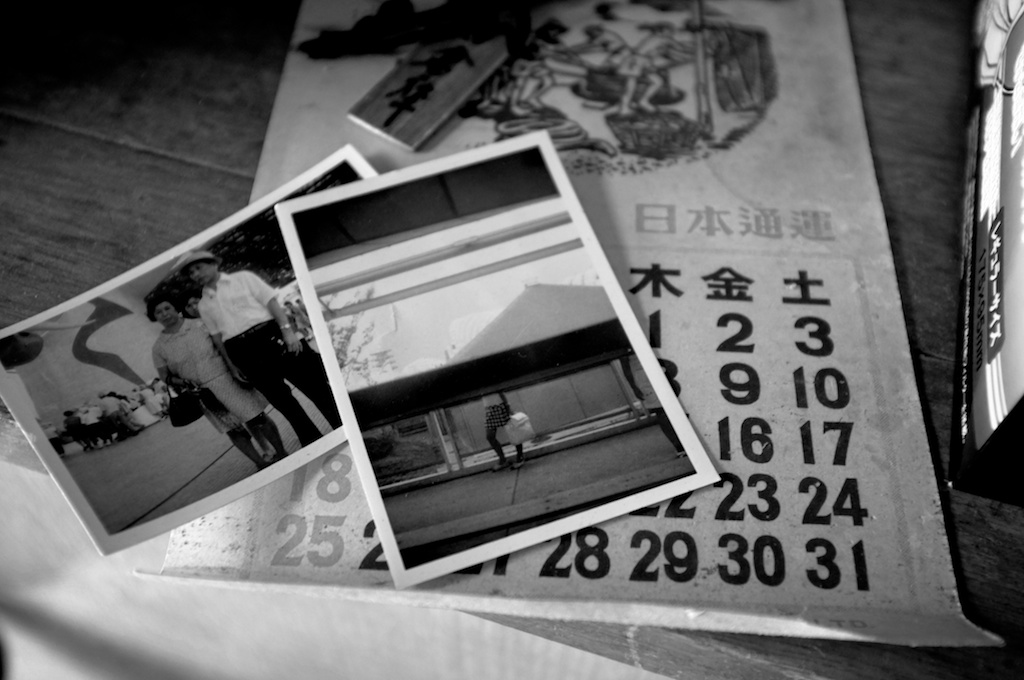
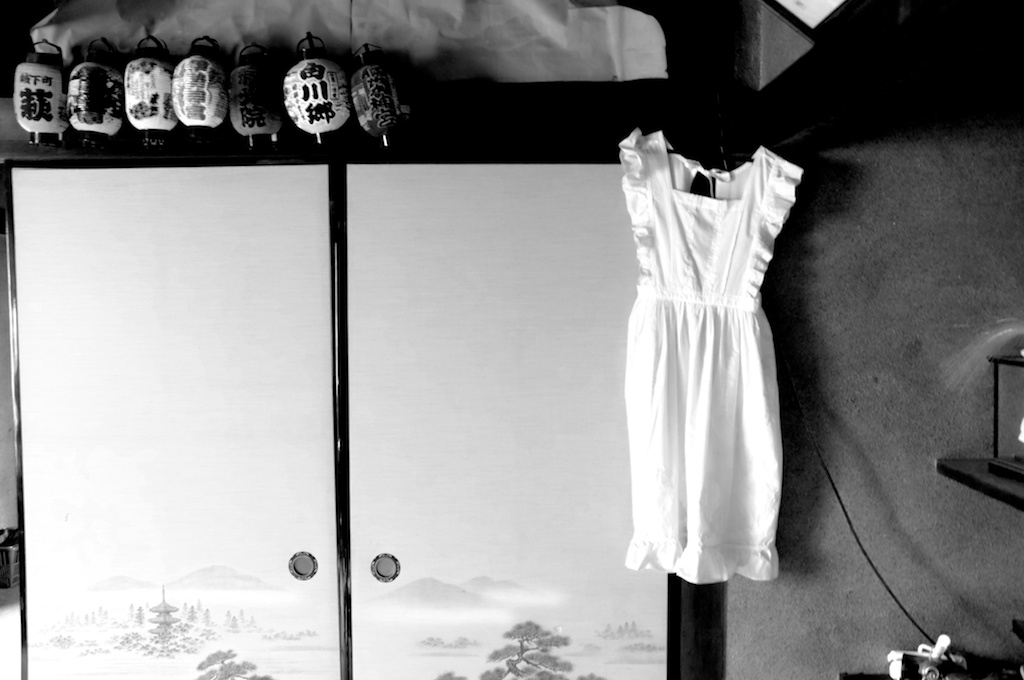
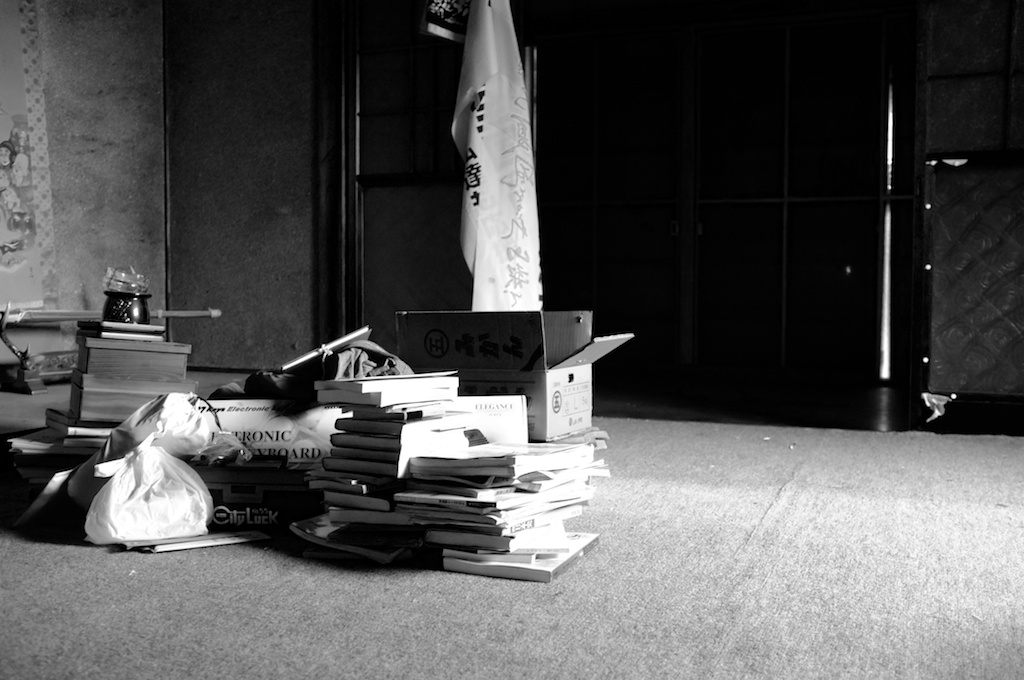
I went to the house of my wife’s grandfather. He passed away already many years ago. The house has received order to be demolished and is waiting for it’s actual destruction which will take place in few months.

The place was eerie as you might imagine old house to be. The air smelled of mold and layer of dust covered everything. There were bunch of comic books, toys, kendo sword, dress.. Fascinating, very visual history. Perfect place to shoot Japanese horror movie..

I was able to take some photos the house of people I never had chance to know.

What's Interesting Photo?

You know photos that attempt to tell a story.. Maybe the photo is just a photo of something ordinary, but it’s taken so that it shows the character of the photographer or the subject. Maybe it’s the situation that reveals something, or maybe photographer’s relationship to the context.

But there’s got to be something.

You know that dull feeling of seeing someone’s travel photos for example. Watching boring travel photos feels like a punishment. Photos that document hotel breakfasts, airplane wings or famous landmarks, for example..

While I suppose it’s possible to photograph airplane wing so that it’s interesting; I wish people were just a bit more creative what comes to selecting their subjects.

Immediately when there’s a person inside the frame, the photo becomes much more interesting. Especially if the person is doing something (except posing).

Eye catching photo is always something a bit different. Maybe it’s the geometry or composition of the photo, or maybe it’s the mere situation itself, or unique light.

Decayed buildings, for example used to be interesting, at least until they became a popular trend.There are tons and tons of photos of rotten and rusty buildings and the photos have nothing particularly interesting about them.

So.. context is not enough. A photo must have a soul. It’s not about mastering the technique of the photo, but getting into the right spirit of capturing the moment.

Henri Cartier-Bresson said that “photography is about placing heart, mind and eye in the same line of sight”. It requires understanding of geometry and framing. To achieve this kind of understanding, one must shoot a lot.

Learn the rules and then learn how to break them.

Looking at Leica M6

My ex girlfriend used to carry her M6 with her at all times but she rarely let me touch it. I merely envied her from a distance while she shot beautiful shots with her rangefinder camera. She always talked about “spirit of a photography” and she never carried a digital camera with her, unless she was shooting for a job. I suppose it wouldn’t be too much to say that like for Cartier-Bresson, her Leica was extension of her eye.

My friend borrowed me recently his Leica M6 TTL with 50mm Summilux ASPH.

I am moved, and amazed by this classic, legendary camera.

50mm Summilux ASPH lens has a focusing tab which allows quick focusing with index finger. It feels just right and for me the tab makes huge difference. Only in few days, I learned to approximate distances and adjust the focus roughly, only requiring a fine adjustment when lifting the camera to my eye. Same goes with metering. When shooting with a camera like this, you learn quickly to read light.

Although this camera has metering, the camera works perfectly without any electricity. I assume that pros who use Leica might not even use the metering since the red arrows in viewfinder might only be a distraction.

The viewfinder of M6 is best thing I’ve ever seen and beats my 5D Mark II and Fujifilm X100 viewfinder in clarity and sharpness. Rangefinder focusing is a pleasure, especially after you learn not to block the rangefinder window with your finger while holding the camera..

M6 is also the most solid camera I’ve ever handled. Although this means also that the camera is probably the heaviest compact camera of it’s size, the solid construction has it’s benefits. This is a camera you can take into a war. Brass (or zinc) is really strong material, and the camera is perfectly balanced. It’s very easy to hold this camera steady when shooting and this will result in sharper photos.

You have to hold one in your hand to understand. This camera is built to last a lifetime.

The mechanics of the camera feel assuringly strong as well. Pressing the shutter results a satisfying click, which is not too loud or disturbing. Although my friend’s camera came with a motor winder which is very silent and fast, I realized I rather prefer manually advancing the film by using the lever.

Although loading film is a bit of a nuisance, I find something honest and precise about loading Leica M6. It’s simply built to be as fool-proof as possible.

Since this is a full frame camera (35mm film), 50mm lens gives you plenty of coverage but also plenty of bokeh.

I think 50mm ASPH is probably the lens I would buy for Leica. The lens is razor sharp and I was unable to detect any kinds of artifacts in the image. Even the widest F1.4 aperture is tack sharp. I can’t imagine any kind of lens of this size (being F1.4!) being that sharp wide open. The nine blade aperture gives creamy, soft bokeh. Also the transition between focus and out-of-focus areas is beautiful and natural.

Overall, there is something very natural about the image quality of Leica.

Since the price of M6 came down recently, this camera seems very attractive option for many photographers. Sure, dealing with film is troublesome and also expensive if you shoot a lot.

But if you are serious about photography, I really recommend at least trying out photography with a rangefinder camera. There is something beautiful and artistic about the process of setting everything manually, and it’s possible to find entirely new aspects of photography when shooting with a classic camera such as this.

Unlike when shooting with SLR, nothing will obstruct your vision when you press the shutter. It’s possible to feel much more connected to the scene you’re shooting.

If Cartier-Bresson would be still with us, I would imagine he’d still carry his Leica with him. In today’s world of digital cameras it’s refreshing and delightful to shoot with a camera designed so meticulously to fulfill a single purpose.

Leica M6 is not a calculator. It’s a camera.
Lunch with Naoto

I had great talk with Naoto today for lunch. We went to Tsubame grill in Shin-Yokohama and we talked (as usual) about cameras and photography.

Naoto is the man behind Zero Stage nickname in Flickr. I saw his previous photos in Eroguranmasse exhibition in Yokohama last summer and I was impressed.

He says he can’t draw and has no artistic drive. His photos, however, tell a different story. He frames his nudes strongly but exquisitely, his camera painting beautiful images that do excellent justice for the organic curves of female body.

Obviously his deep understanding of monochrome and film photography in general must have something to do with the excellent result. But I would say that it’s his artistic talent which drives him to capture female beauty in such passionate and beautiful way.

My personal favorite of his work would be the nude woman in empty bath tub. The light is soft like afternoon light, and the model has relaxed but expecting look. She is both proud and fragile. This is just one of his works that have this sensitive erotic appeal to them.

Naoto’s eyes shines when he talks about film. He said that he wasn’t so interested about photography when he used digital camera. He said only after he started using film, he got really interested in photos.

I am really looking forward to see his incoming exhibition later this month. In the meanwhile, thank you Naoto-san for borrowing me your Leica M6.

(We both ended up in cover of March edition of Yokohama Seasider. Oh, we lucky handsome gentlemen!)

Interview of Maya Sinji Jung Coming Soon

I recently discovered very talented photographer Maya Sinji Jung in Flickr and JPGMag. I contacted her and we made friends. And she promised me her interview.

She says she wants to be a storyteller to the world, using her photos and films. I was very moved about her writing as well, she has such unique talent for poetry and verbal expression.

She is now traveling so I will be back with her interview as she returns.

Danger Coast

I went to Tojimbo cliffs in Fukui Prefecture some years back. The place was just as eerie as it’s reputation as famous place for suicides in Japan. The cliff’s shape was very unique and sharp rocks looked very lethal.

There are free telephone booths which can be used to call for help, should one find himself in desperate situation, and also people patrolling the area. All of these are organized by volunteer force.

Japan’s suicide rate is among the highest in the world. There are about 24,4 suicides per 100,000 people. Japan was ranked second in 2009, after Russia.

While mass media is thriving..

Lily

This is an old photo of a lily I took back in 2008 and did some Cross Process magic in Aperture 3. This was shot with Eos 350D (EOS Kiss Digital N) and the trusty 50mm 1.8 “plastic fantastic” at F/2.2. That wasn’t a bad camera.

Landscapes

Photos of landscapes help us to see how beautiful our planet actually is. There are many great landscape photographers here in Japan. And you can’t mention landscape photography in Japan without mentioning Habu..

Photographer is like a painter who seeks to capture the beauty on this planet.

It makes me think of many things.. How to be more aware of my surroundings, and how to look at the scenery in some new way..

Sky is the limit..