Just enrolled. Looking forward to start my studies!
I will keep you updated on how it goes.
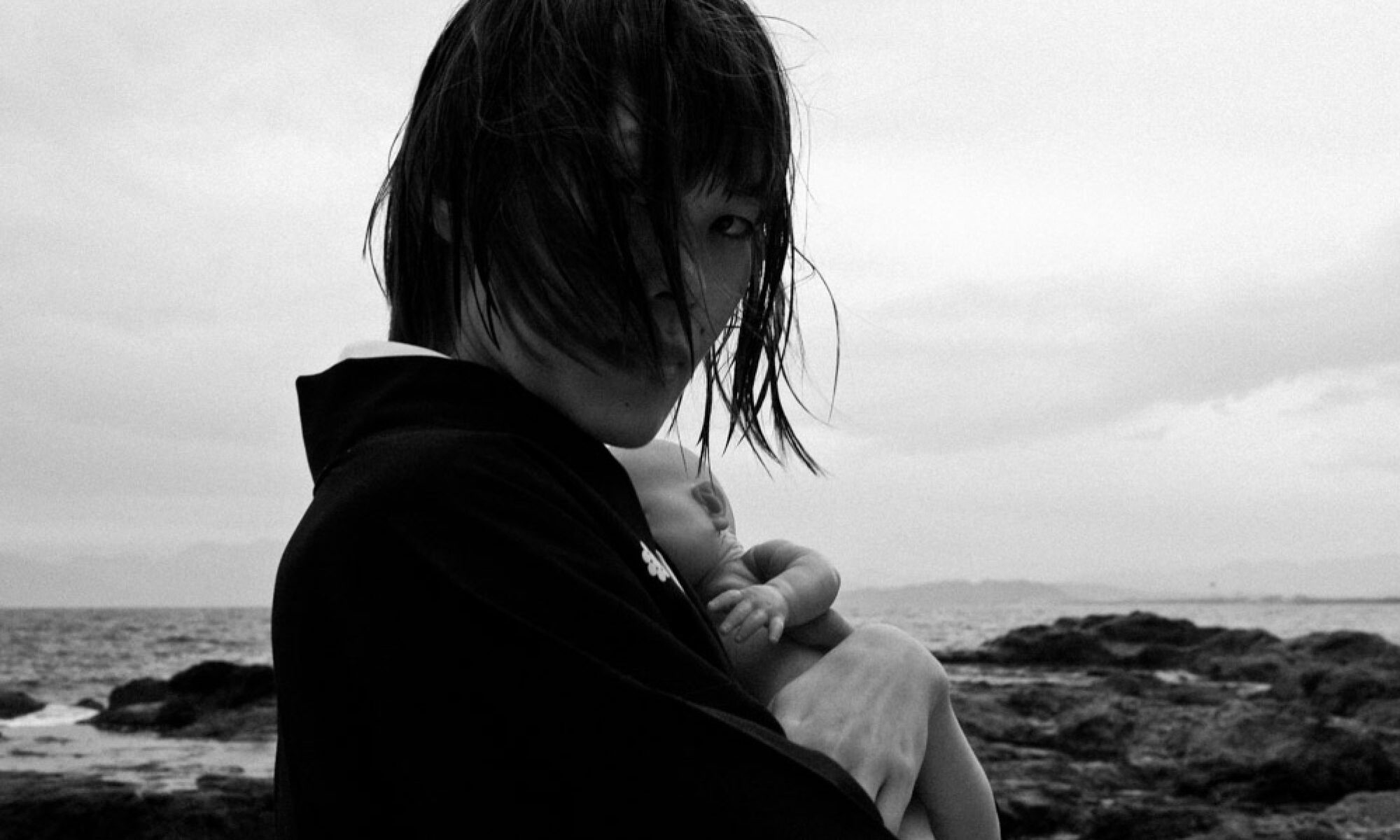

Because all what we have is now
Just enrolled. Looking forward to start my studies!
I will keep you updated on how it goes.
Shot with Bessa R3M / Nokton 40mm / Tri-X 400.
I had pleasure to shoot formal profile photo if baritone Inoue san in Shinjuku park. This one turned out to be the best.
Probably all would agree that equipment management is crucial for working photographers. It’s not very professional to arrive to set and notice your battery is empty or even worse, missing.
Canon’s camera manual advices you to make test shots before important shoots, or even take camera to be checked up by Canon’s authorised service professionals for check-up. Sound advice, I say.
I have a principle to always have backup for everything, including the camera body. Even though modern DSLRs have sensor cleaning mechanisms, it is possible that something gets to the sensor, piece of hair or skin for example. Bulb blower is a must have, but sometimes even that doesn’t help. Bring extra body, just in case something goes wrong. And camera’s shutter has always a limited lifespan anyway, so sooner or later it’s going to break. Extra camera body might save your day and reputation.
And after the shot, take super good care of that memory card. It’s like your digital negative. Now that we have tools like iPad, it’s very handy to have one of those camera connection kits (especially with Retina display iPad) with you. It’s great for on-location previews and backups.
There are some theories that large memory cards might be more prone to failure than smaller ones. I am still shooting with 16GB card and it’s unlikely that I would ever get larger card than that. And if you split the shoot to two cards, even if one of the card fails, you wouldn’t lose everything. So far, I have never had memory card failing on me, but I have heard many horror stories.. especially after someone has shot a multi-million-yen wedding.
Rather than deleting photos from memory card, I would recommend formatting it. I have heard this reduces the chance of getting some kind of (eh, I don’t really know what I’m talking about) logical error in the data of the disk.
So, the lesson here is that pro or semi-pro photographer must take very good care of his/her gear. That gear is probably expensive (and if you are sports photographer VERY expensive), and it’s your lifeline really, much like parachute is for skydivers.
If you do pro shoots daily, my advice is to keep every necessary item in your camera bag always when you are in home or studio. Then you will get into the habit of never forgetting anything, and basically just recharge batteries and format memory cards in advance, and then take that bag and you’ll be ok.
Good luck for shooting!
It was so nice time. Thank you.
https://vimeo.com/49221419
My Shinjuku sunset photo was featured in Getty’s Flickr Summer Japan Collection 2012! Thank you Getty! 🙂
http://www.youtube.com/watch?v=oEIQeeSokGs&feature=BFa&list=UUcIgGcUE-nb1tYKya3Qtp0Q
I uploaded the collection of Jeju photos in Flickr. I intend to release a photo book later with these photos under the title “Photos from the Healing Island”.
http://www.flickr.com/photos/yaschan/sets/72157630978661750/
This is the final photo of the series “Island Mother” which we shot in Enoshima in March.
I saw interview of Mattias in Youtube channel of Eric Kim. Soon after that, I decided to contact Mattias and ask for his interview which he kindly granted.
When did you discover photography? Was there a moment in your childhood or adolescence when you discovered that you love taking photos?
I’m a really late bloomer. I actually got my first camera as late as 2006. But visual imagery has always played big part in my life as I studied design and worked as a graphic designer.
In your photos, one can sense solitude or a kind of loneliness. Tell me a little about this and capturing that unique atmosphere.
It is true, at first it was an unconscious decision. But after looking at my work I really found that it reflects me as a person and now it is a very conscious decision in my photography.
How did you meet Eric Kim? Tell me your first impression about him.
I met Eric in Tokyo. I attended a workshop in there that Eric had together with Charlie Kirk, Bellamy Hunt and Afie Goodrich. My first impressions of Eric is that he is a super nice guy, full of energy.
He is a quite unique person, he loves sharing knowledge and is kind of like a Energizer Bunny :D. My friend Brian (Sparks) calls him “Eric Machine”.
This spring I invited him over to Stockholm to hold a four day workshop here, and it all went well. I do not know of anybody who have met him in real life that does not like him. He is a top man!
Tell me about capturing the beautiful photo of Linnea.
I was out shooting with Eric and we talked a lot about projects and the importance of shooting and working in projects. I am currently working on a project with the working title “The Elderly”.
And as we were walking I spotted here from a distance and knew right away I had to include her in the project. So I approached her and started talking to her and asked if I could take her picture. She agreed and I took a total of six shot of her and they where all pretty good.
The amazing thing was afterwards when she told me that I had made her day. It felt really good and totally made my day as well.
How was your trip to Tokyo? Do you intend to return here?
My trip to Tokyo was totally amazing. I love Tokyo! My only regret is not staying longer. I made a lot of new friends and I have every intention on going back as soon as I can.
Many photographers have great images but find arranging them into a sequence very difficult task. Would you have any idea on how to make the process easier?
No, it IS REALLY hard. But my general advice would be to her very hard in your edit and let the edit take bit of time. Also get input from people you trust, and get the input in person not on Flickr. I do not think that feedback on the internet is very useful if you really want to know what people think.
And if you have a set of images I think it is generally good to let some time pass from the actual shooting to the editing. You need time to detach yourself from the emotion that you had when you took the picture. Sometimes that emotion is preventing you from seeing if the picture is good or not.
This emotional attachment is very interesting and quite common with photographers. Do you believe detachment would help? If so, how to achieve detachment during shoot of emotional subject?
I think detachment is important in Street Photography. I´m not sure about other genres. But when it comes to Street Photography, you have to detach your self from your pictures. It helps you being a better editor of your work but it is really hard.
The emotion you feel when you raise the camera and dare to shoot a stranger you never have met before is quite satisfying (or even horrifying), sometimes that feeling and your memory of the moment can be so strong that when you look at the picture, all you feel is that feeling. And that can sometimes cloud the judgment of the actual picture.
In these “Flickr-fav-Explore”-times you can really feel the pressure to get instant feedback, and you quickly upload and just wait for the comments to roll in on your “amazing” picture… And sometimes when you look back on your old pictures you can see that the picture is sometimes not as good as you remembered it to be.
There are some ways of “helping” your self to let your pictures digest. One is to work in time based projects and not look at the pictures at all until the timeframe has passed. Another way is to shoot with film, although it does not suit everybody.
What photo books would you recommend to a person who has no photo books?
I would definitely recommend Robert Franks “The Americans” It is a classic regarding to editing and sequencing a project. It is one of my favorite books.
Thank you Mattias! You can find more about Mattias in his website:
http://longtallswede.com

Yesterday, I found Miyoko Ihara’s photo book “Misao the Big Mama and Fukumaru the Cat”. The photos are unique and heartwarming; I can feel the photographer’s intention clearly; the human connection between the cat and grandma.
In her website she says:
“My grandmother and her cat are always together. This is the photobook captured the everyday life of my grandmother, Misa who bends her self to the fields work with her cat Fukumaru.”
What especially delighted me about this book is what I call a kind of artistic honesty; Ihara doesn’t try to be artistic, the photos are simple captures of real life events, but are exactly that in creative and artistic way. Ihara’s framing and selection of subject feels very profound and honest; it must be the result of her years in Nippon Photography Institute that took her to this level.
Although I understand why some of the photos might be criticized as being a kind of cute, the meaning behind the photos is clear; they are honest description of human connection. Fukumaru is very unique, odd-eyed cat and his partner and the 87 years old grandmother whose eyes show experience of life are naturally suited to each other.
The life of this couple is well captured in their green, lush environment.
It’s remarkable what the photos show if you take a moment to really look at them. Sure they are cute photos, but they are also much more. It is unclear to me at this point whether the photos were taken digitally or with film camera, but in any case, the print is excellent with very rich and saturated colors.
Especially I was moved about the second last photo, a rainbow captured in a very beautiful way.
I highly recommend this photo book to anyone interested in photography.
Find out more about the photo book in:
http://www.littlemore.co.jp/enstore/products/detail.php?product_id=357