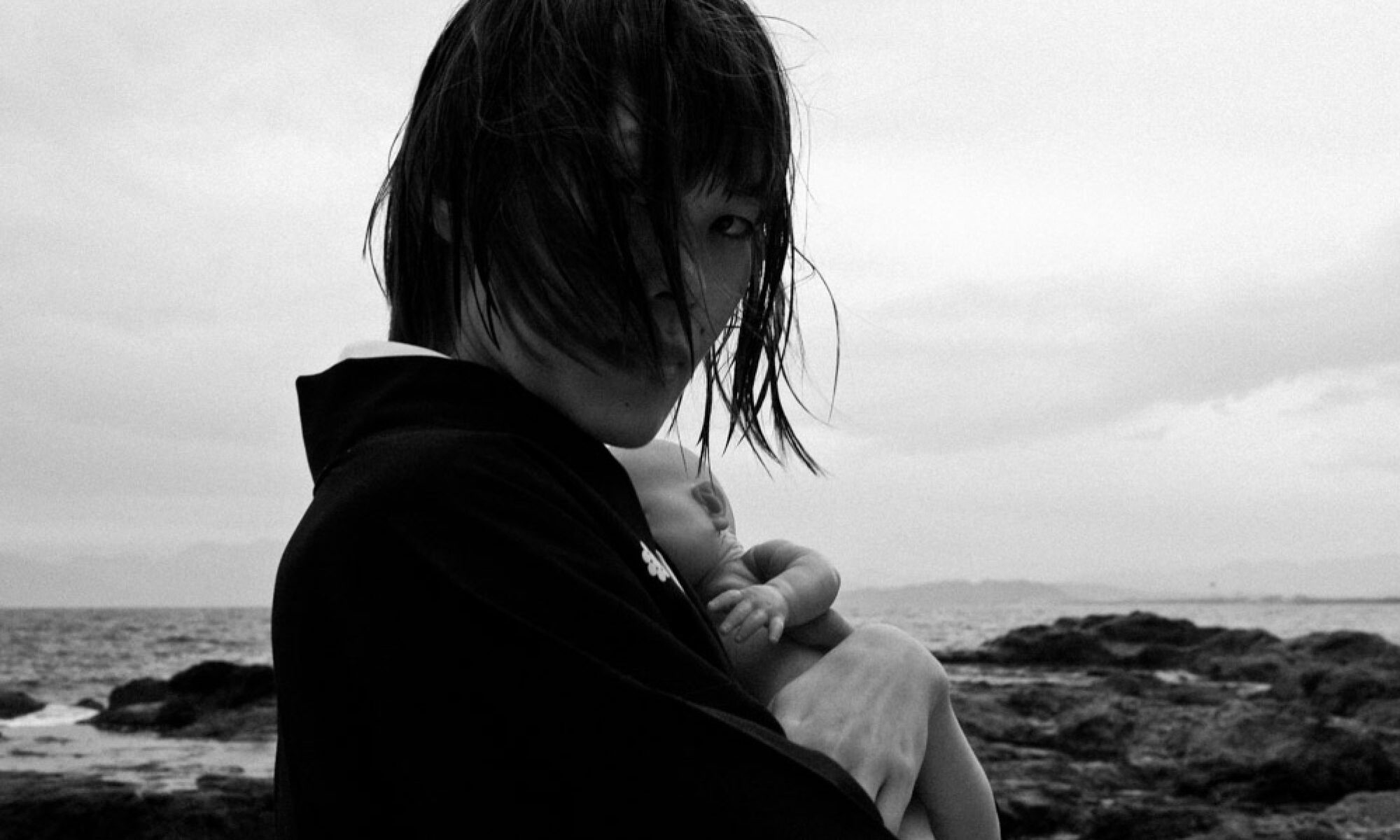

This is the final photo of the series “Island Mother” which we shot in Enoshima in March.
Yoshidamachi Gallery
Four of my photos under title “Japan 日本” will be exhibited in Yoshidamachi Gallery in Yokohama from this Monday until Saturday. It is ten minutes walk from Sakuragicho station.
I will also perform live in Saturday’s closing party. The other artist performing is my friend Vidya Murti. I hope to see you there.
From Here Sometimes, Here and Then..
It’s been quite a week! It was amazing for me, that so many wonderful people came to see my exhibition. Everyday turned out to be a party of it’s own kind, really amazing, happiest time I’ve ever had.
Your presence made the event; thank you.
Now, I just want to stay quiet and listen.
Here Sometimes Opening Party
Here Sometimes Opening party in Art Mania Yokohama.
http://youtu.be/ga77ub5StBE
Here Sometimes, Tomorrow
My photo exhibition Here Sometimes will start from tomorrow. It has been quite a journey to get here. I really want to say thanks for everyone who was involved in making the photos.
Especially I want to say thanks to Saeko Nakahara, the beautiful model in the photo “Adoption” which is now in the front page, Maya Sinji Jung, my sister and big teacher in Jeju, and Turo Halinen who took the top photo in this post.
I also want to say thanks for my wife for allowing me to do what I want.
We have opening party at 6.00PM in the gallery tomorrow. I hope you can make it before the wine disappears.
Yokohama Seasider
Thank you Yokohama Seasider! I’m so happy to be there.
If you are in Yokohama area during 23-29 of this month, make sure to drop by in Noge.
Interview with Mattias Leppäniemi
I saw interview of Mattias in Youtube channel of Eric Kim. Soon after that, I decided to contact Mattias and ask for his interview which he kindly granted.
When did you discover photography? Was there a moment in your childhood or adolescence when you discovered that you love taking photos?
I’m a really late bloomer. I actually got my first camera as late as 2006. But visual imagery has always played big part in my life as I studied design and worked as a graphic designer.
In your photos, one can sense solitude or a kind of loneliness. Tell me a little about this and capturing that unique atmosphere.
It is true, at first it was an unconscious decision. But after looking at my work I really found that it reflects me as a person and now it is a very conscious decision in my photography.
How did you meet Eric Kim? Tell me your first impression about him.
I met Eric in Tokyo. I attended a workshop in there that Eric had together with Charlie Kirk, Bellamy Hunt and Afie Goodrich. My first impressions of Eric is that he is a super nice guy, full of energy.
He is a quite unique person, he loves sharing knowledge and is kind of like a Energizer Bunny :D. My friend Brian (Sparks) calls him “Eric Machine”.
This spring I invited him over to Stockholm to hold a four day workshop here, and it all went well. I do not know of anybody who have met him in real life that does not like him. He is a top man!
Tell me about capturing the beautiful photo of Linnea.
I was out shooting with Eric and we talked a lot about projects and the importance of shooting and working in projects. I am currently working on a project with the working title “The Elderly”.
And as we were walking I spotted here from a distance and knew right away I had to include her in the project. So I approached her and started talking to her and asked if I could take her picture. She agreed and I took a total of six shot of her and they where all pretty good.
The amazing thing was afterwards when she told me that I had made her day. It felt really good and totally made my day as well.
How was your trip to Tokyo? Do you intend to return here?
My trip to Tokyo was totally amazing. I love Tokyo! My only regret is not staying longer. I made a lot of new friends and I have every intention on going back as soon as I can.
Many photographers have great images but find arranging them into a sequence very difficult task. Would you have any idea on how to make the process easier?
No, it IS REALLY hard. But my general advice would be to her very hard in your edit and let the edit take bit of time. Also get input from people you trust, and get the input in person not on Flickr. I do not think that feedback on the internet is very useful if you really want to know what people think.
And if you have a set of images I think it is generally good to let some time pass from the actual shooting to the editing. You need time to detach yourself from the emotion that you had when you took the picture. Sometimes that emotion is preventing you from seeing if the picture is good or not.
This emotional attachment is very interesting and quite common with photographers. Do you believe detachment would help? If so, how to achieve detachment during shoot of emotional subject?
I think detachment is important in Street Photography. I´m not sure about other genres. But when it comes to Street Photography, you have to detach your self from your pictures. It helps you being a better editor of your work but it is really hard.
The emotion you feel when you raise the camera and dare to shoot a stranger you never have met before is quite satisfying (or even horrifying), sometimes that feeling and your memory of the moment can be so strong that when you look at the picture, all you feel is that feeling. And that can sometimes cloud the judgment of the actual picture.
In these “Flickr-fav-Explore”-times you can really feel the pressure to get instant feedback, and you quickly upload and just wait for the comments to roll in on your “amazing” picture… And sometimes when you look back on your old pictures you can see that the picture is sometimes not as good as you remembered it to be.
There are some ways of “helping” your self to let your pictures digest. One is to work in time based projects and not look at the pictures at all until the timeframe has passed. Another way is to shoot with film, although it does not suit everybody.
What photo books would you recommend to a person who has no photo books?
I would definitely recommend Robert Franks “The Americans” It is a classic regarding to editing and sequencing a project. It is one of my favorite books.
Thank you Mattias! You can find more about Mattias in his website:
http://longtallswede.com

Jeju, and Island Mother
I went to Jeju-do island recently to shoot a documentary “Island Mother”. I was very moved and humbled by the people I met on the island. In their eyes I felt nothing but love and slow life; even simple thing as making coffee was natural and beautiful. Not once I saw a stressed look, and people had always time for gentle chat.
This truly was a new definition of slow life for me.
Jeju as a location is truly amazing. There are palms, coconut trees and pines, big volcano about half of Fujisan, forests, green meadows and beautiful oceanside. But more wonderful than the place are the people who inhabit the island. The island itself has a long history that has it’s painful moments too. I felt this island has seen everything.
But then, Jeju is known as a feminine island, island of women divers.
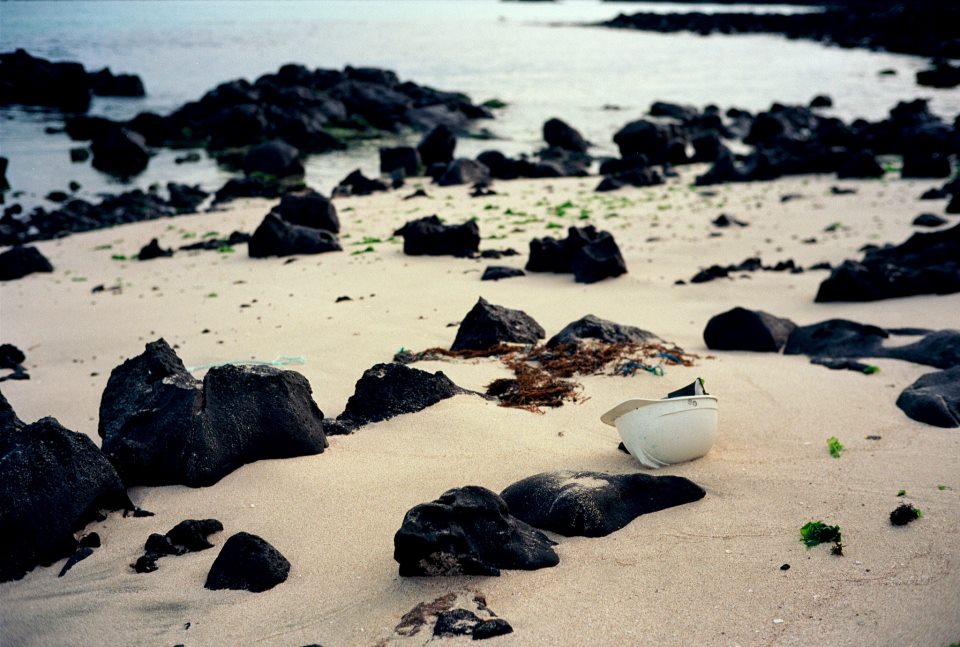
And there are many wonderful, hand made rock walls! The rocks are dark rocks, totally unique ones. The culture of making the rock wall is now endangered because the generation who still had knowledge of making them is now passing away; young generation have no idea how to build rock wall from these six-side cut stones. It’s quite amazing really how the walls are made with nothing but a clever placement of stones; much like tetris. Cement feels like cheating after I saw these!!
I met these wonderful people in Island Zorba cafe and took their photo.
Island Mother will be in Yokohama Art Department 2 in September with photos and short documentary film about myself.
Nakashima Hiroki: Land of Smiles
Yesterday I went to see Nakashima Hiroki’s photo exhibition Land of Smiles in Gallery NIW in Tokyo. I met the photographer in Dark Room Intl. in Yokohama before and had chance to see his work.
Land of Smiles is a collection of candid street portraits took in Thailand.
The portraits show natural connection between the photographer and the subject, and that, according to Nakashima is his purpose. The people looked at ease in their natural poses; the photos didn’t seem to be taken by a traveler, but someone local. Not a small achievement.
The sequencing of the photos as well as the technical quality of the photos were excellent, and show the obvious experience and skill of the photographer. I would also imagine Nakashima’s choice of the media, film instead of digital, is very conscious one.
Overall, the portraits had great variety and all of them had something special. In all of the photos the subjects seemed relaxed and at ease.
After I returned, it occurred to me that perhaps it was the last photo that gave me the final impact, the beautiful young woman dressed in white. The photo had a hint of sadness in it, what I especially liked, a photo that stood out from the others.
Without it, the smiles in the rest of photos might have lost their purpose. The sequencing is very important in any exhibition and the way how Nakashima organized his photos really made them shine, a skill what is only learned by doing.
Land of Smiles is a wonderful work of a human subject.
Visit Gallery NIW until 6/19.
Why I love Ektar 100
Ektar 100 is a ultra-fine grain color negative film, which is designed for outdoor and studio shots. According to wikipedia it is rated as semi-professional film (although in the box it says Kodak Professional). The old Ektar was discontinued in 1994; Ektar 100 is relatively new film, based in new technology.
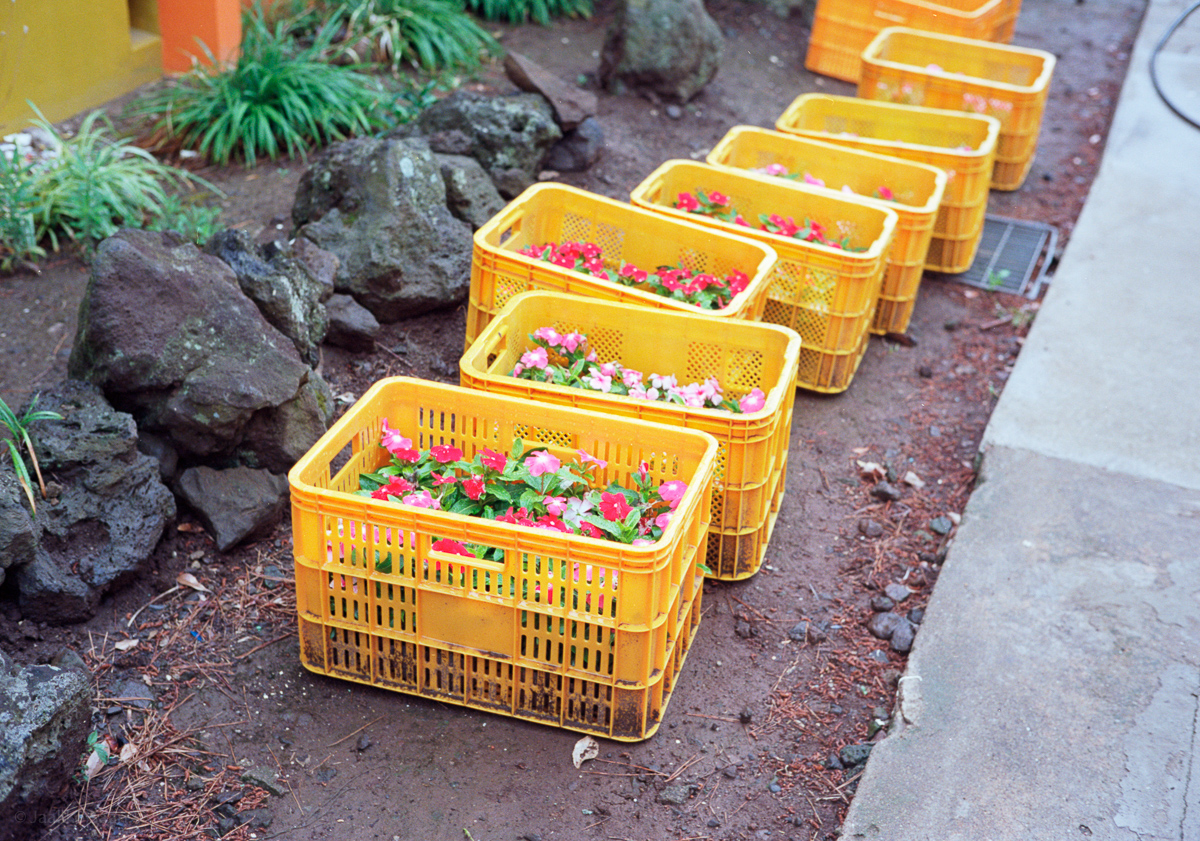
The results I get with Ektar 100 are amazing. There’s tons of dynamic range in the photos while the photos are rich in contrast. Colors are vivid and very natural. Even with my EOS 5D Mark II I find it difficult to achieve result that would be similarly natural or pleasing.
The film seems to respond especially well to the outdoor light and the results are immediately usable. There’s something a bit extra there what could be the magic of the film. I find that attractive and kind of “honest” to the scene I am shooting. I suppose it has something to do with white balance, digital cameras do auto white balance (if you set them to do it) while with film you kind of get what you see or whatever the film is balanced to. Ektar is really close to the dream I have always had about the perfect photo in means of the color and mood. It’s easy to fall in love with this film.
This is ISO 100 film so in rainy days it might be quite difficult to get the proper exposure unless you bring a tripod. Ektar 100 is also used for studio shooting and product shots and in Kodak’s site they actually recommend this film for those uses, likely because the photos with last some serious enlarging.
Indeed it seems that Ektar 100 shots can be enlarged very nicely, as long the scans are made properly and are a good quality. To get the scans correctly inverted requires a profile from your scanning software for this emulsion. Without the profile Ektar 100 can be tricky to scan. SilverFast Negafix plugin does feature it which is the reason why I decided to get Plustek scanner which is developed together with SilverFast (of course SilverFast comes included).
Shooting film in general is very different from shooting digital and getting to know different film stocks is necessary in order to know in advance what to get. Ektar 100 delivers for me and it is quickly becoming one of my main tools.