Belkin Qode Thin Type Keyboard Case

I bought Belkin Qode Thin Type Keyboard Case for iPad Air. I came to conclusion that my Macbook Pro 15″ is too much to carry around all the time, especially since I often take my son to kindergarten and have a lot of other things to carry around every morning. But then I very much need something to help with typing with when I’m outdoors.

I’m positively surprised. Although the experience of typing with this is not as comfortable as with my Macbook Pro it’s way better than with touch screen. The layout of the keys is clearly designed mac users in mind. It’s nearly perfect in fact, except the colon key which is relocated near spacebar; this will take some getting used to.

The upper row of keys from left to right have home screen button, lock screen button, app switching button, keyboard shortcut, screenshot button, three mysterious buttons that resemble ancient portable TV (what are those things?), music play controls and volume controls, and pair button(1). When placing the iPad on the groove, the on screen keyboard automatically slides away, but can be summoned by using the keyboard button. The keyboards can be switched on the fly by pressing fn + the colon key which takes some getting used to as the language can be changed only by repeated presses, not by arrow keys although the list style suggests so. (2) Siri has it’s own shortcut key as well between the fn and option key. (3)

The combo of iPad and Bluetooth keyboard is a well working package. Apple has clearly designed iPad for this use scenario in mind. When typing, the on screen keyboard slides away from the view. Selecting text and copy&paste works just like when using mac and it’s possible to jump words and paragraphs by pressing option key plus arrow keys. Even command + z works for undo.

I notice my fingers fumbling around for the nonexistent trackpad and then I intuitively tend to touch the screen which brings the screen obscuring on screen keyboard. Eventually my nervous system will get used to navigating with option + arrow keys which is a good thing even when using real computer. It is quite interesting phenomena psychologically. This combination might change my way of working for the better actually.

Indeed it is very exhausting to reach for the screen; it breaks the concentration. A lot has been written about the ergonomics of this type of setup and I can really second that. When our hands and fingers are resting on one plane it does feel strange having to move them to the other. When using iPad alone this doesn’t matter because we are handling the device anyway and our mind is in that kind of space. But typing on keys and then taking our hand off from the surface and reach to another tangent, it just doesn’t feel natural. This might be the reason why there are no touch screen Macs.

However, with a little practice it’s easy to get used to the handy keyboard shortcuts.

The keyboard also works when placing iPad vertically in the groove. (4) However the vertical orientation somehow just doesn’t feel right for me, especially when using earphones, since the cable will be getting on the way, a lot. The horizontal position instead is a sweet deal, the earphone jack is positioned on the lower corner, volume controls and the orientation lock/mute switch are nicely on the top.

[vc_separator type=’normal’ position=’center’ color=” border_style=” thickness=” up=” down=”]

Notes:

  1. I didn’t need to use the button; I just selected the keyboard from the settings app, no pairing was necessary.
  2. Typing Finnish is possible with this keyboard although it took me a while to realize that ö is next to the space bar since it’s the colon key in the US layout.
  3. I can’t see myself ever using the siri key.
  4. The button which turns on the keyboard is in the center; placing the iPad exactly on the center might be a bit unreliable because the button will be exactly on the same position as the lighting port connection; therefore the button might not be pushed properly. So it might be necessary to offset the device a bit.
  5. Finally : As I was typing this (with the keyboard) I ran into the super ridiculous issue with the under-finger-loupe thing as I was selecting piece of text with my finger (I still don’t remember that I could just easily move around with arrow keys). The loupe behaved as if the iPad was in portrait orientation. Complete madness.
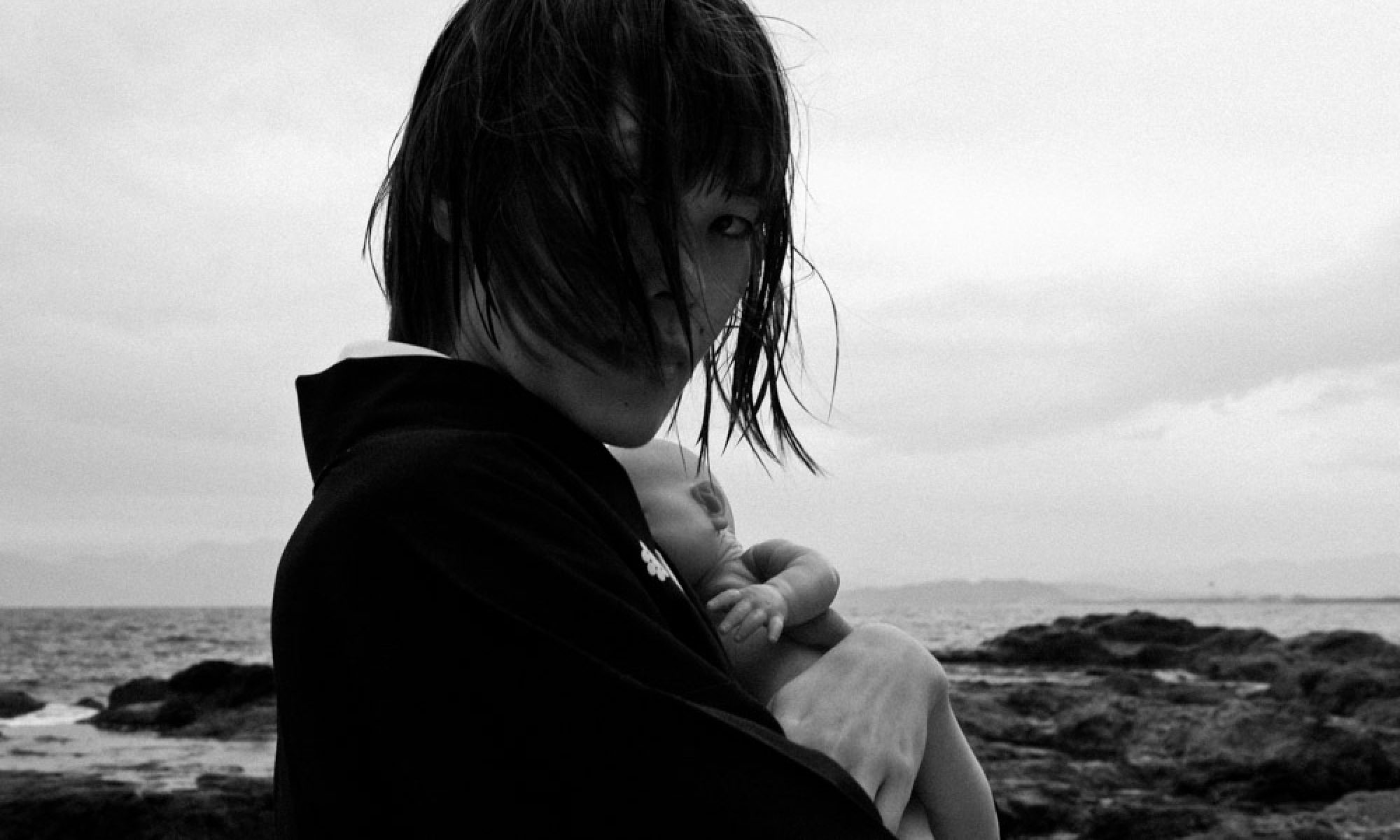
Nobuto Fukutsu's Exhibition

I had chance to meet my friend Nobuto Fukutsu today, again, after many years. It could be said that today I met him for first time, through his work.

His work is lyrical expression, but also free and artistically pure. His floral pattern and soft colour make stark contrast with the striking expression of the women, and (inevitable!) atomic explosion! I love this disguise, indeed, Fukutsu is an artist of great magnitude.

Nikomat EL

I was making some prints in Photo Kanon  today and I found interesting camera on the shelf. They had Nikomat (Nikkormat) EL and Nikkor 50mm 1.4. It looked brand new, like it had just came from Nikon factory. So I asked how much it was, and I was surprised, only 18,000 yen. The meter works, and it even came with new battery.

I’m not very interested about cameras. Especially digital cameras. They release new ones every year and new cameras take cleaner and cleaner images and pack new features. They are like miniature computers. The whole race for convenience turns me off.

But Nikomat! This camera was made before I was made! They produced these in Japan from 1972 to 1976. There is something that genuinely attracts me with really nice objects like this. It feels like a real tool which has a story.

I shot a roll of Lomography 400 with my Nikomat this afternoon and I really love to shoot with this camera. My Bessa R3m feels like a plastic toy after I hold this brick on my hands. It’s obvious that this camera is made to last.

Metering is nicely implemented, and is really easy to get used to. I didn’t try to shoot with aperture priority mode yet since I’m really used to shoot full manual. Downside with this camera is that if battery dies, you can only shoot with 1/90 (unmarked shutter speed), since the shutter speed js controlled electronically. That would mean ND filters if shooting outside. Battery is, by the way located under the mirror! At least you won’t lose battery door..

This is SLR all right and focusing is very different than with rangefinder. There’s no autofocus. But also it feels kind of refreshing to see exactly the image I’m going to capture, through the lens. I’m so used to shoot with my rangefinder. And this can focus closer than Leica.

Shutter is kinda loud that is to be expected from SLR.

The Nikkor 50mm lens is a big question mark for me. I have never shot with Nikon lens but this is as wide as 1.4 so it should be really nice lens for indoor photos. My Nokton 1.4 lens is very contrasty one, so I do hope Nikkor would offer a bit more gentleness what comes to contrast. I will develop my first roll tomorrow, so we’ll see.

I will write a complete review of this camera after I get acquainted with her more.

Like I watch photos and you

I want to be pushed off the cliff. I want to be destroyed. I want to be burned, crashed, chopped to pieces. I want my rotting body to be fed to vultures. Yes, I want art to make me feel something. I want neurons in my brain to light up. I want fucking voltage!

Araki’s photos are like a woman too beautiful. Like a landscape too distant, like vanishing note of last song you hear, you know, like sigh of a lover just before she reaches orgasm. Photos of Araki reach deep down in you and bring back emotions you had long forgotten. Warm, wet and real.

When I first saw Sentimental Journey in Kiasma, I was almost literally in shock for two weeks. I remember I cried sometimes before sleeping, when I imagined the scenery Araki must have felt in his heart when he saw his cat playing in the snow after Yoko’s death. Such beauty was too much for 20 years old virgin like me. And now I know I’ll never recover.

I feel photo criticism is such a vanity for the most part. Waste of time, almost. It would feel so inappropriate to describe photos by easy words, like in Flickr. It’s like describing Henri’s famous photos in Seville “hey Henri, cool compo”. Moriyama Daido can’t use a complicated camera, but prefers to use automatic point and shoot. Going through his photos and saying “look, the guy knows how to use rule of thirds” would feel so silly, wouldn’t it?

Instead I think it makes sense to describe personal encounter with photographic images since it’s a good context to describe yourself and the moment. Photos shouldn’t have titles because titles make viewer see just that one thing in the photo. Unless, of course that’s what the artist wants. I am more interested about the real person than the photos, maybe.

As Susan Sontag said in her book, camera cannot assasinate. But camera can kind of rape, because it can portray person in a way that cannot be controlled by the subject. Photo can show person in a way he or she don’t want to see him or herself. This is the reason women often dislike their photos picked and selected by photographers, but would rather like to pick the shots they like themselves. It is almost impossible that woman would agree with photographer’s vision of herself. Only models can explore the area away from their comfort-zone, but then that’s kind of their job. Most women want to look beautiful. And honestly, I have no idea what that would mean.

Of course, another factor worth considering is time. I don’t just mean about light and shadow, but I mean the spiritual mood of the subject and photographer. Sometimes there is just right time to take photo of a person, often when he or she is not looking to the camera. To understand and cope with this reality is basically life and death for photographer. Great photographers are kind of invisible, they are just there and people don’t care about them.

I would like to also mention in this context what I feel about posed shots (studio shoots / outdoor shoots with model). I don’t think one should be in possession of a fancy camera to make these kinds of photos. In fact, it is interesting to approach posed shoot with a point and shoot camera in natural light setting. Photos like these must also be natural, while still being obviously planned photos. It’s one of my goals to find the climax point between planning and improvisation. I’m really not such a great planner, as those who have worked with me, painfully know. Definably I want to explore the area of posed photography from now.

This is one of “kakkoii hanashi” ( cool talk) and I’m sorry about that, but I think I’m honest when I say that photography is kind of like sex to me. I want to shoot to know I’m not alone.

With love,
Jaakko

Thoughts on Kaze Tachinu

I just saw the latest animation film by Hayao Miyazaki. This film is very anticipated movie for all Ghibli fans. Kaze Tachinu (Wind Rises) is dramatized biography of Jiro Horikoshi, designer of Zero fighter plane for WWII. I haven’t yet read the manga which this movie is based on.

The movie begins with a dream-like sequence from the main character’s childhood. He sleeps, dreaming of flying. In his dream he climbs on roof of his house on which there is a fantasy airplane waiting. He takes off enjoying the breeze, but suddenly finds huge bomber ready to deliver it’s payload, sinister dark creatures on huge black bombs. The boy’s glasses are torn away by the wind, and the boy falls, then wakes up.

In overall Kaze Tachinu is a great movie; this is genuine Ghibli production. Hand drawn old-fashioned animation is great and is occasionally complemented by CG-aided sequences. As you might expect, level of detail is amazing.

I love the way how CG techniques were used only to aid the main storyline, they were never too obvious to steal the attention. This is exactly how it should be done.

The overall style of the film is so elegant and true to the era it depicts, furniture and houses for example looks so real; significant effort must have been done to research and ensure the authenticity of the environments.

The movie doesn’t really show war but wartime is just a context or environment for this film. It would be wrong to call this romantic movie although the story contains tear-jerking romance. It feels appropriate, warm and human.

It would be easy to imagine that Miyazaki wanted to make more stronger anti-war movie but couldn’t because of pressure from sponsors. So he might have had to choose more subtle method; reference to the horror of war via metaphors such as natural disaster, injury or death of a loved one. Even though this is huge Ghibli production, Kaze Tachinu Has received a little attention in mass media. It just seems that in present day Japan, war or recent history isn’t very popular topic. Some TV channels seem to have even decided not to mention the movie at all.

It is curious that Miyazaki chose this topic, in this very moment in Japan. The Liberal Democratic Party had landslide victory in the two last elections, and the party has been very open about it’s intentions of changing the pacifist article in Japanese constitution and arming Japan with military and possibly nuclear weapons. Anti-war theme couldn’t be more unpopular.

But then, it might be the reason why Miyazaki decided to make this film.

I did notice that some of the scenes were cut, probably by some other factor than Ghibli or Miyazaki, maybe sponsor forced edits. If there is ever going to be director’s cut, it will be a must-see!

I really recommend this film. Bravo, Miyazaki Hayao!

Kaze Tachinu

Tomorrow I will take my family to see the new Miyazaki film Kaze Tachinu. I really look forward it. I will write my impressions after the movie session.

Selecting the movie this time was not difficult. We soon agreed 100% it’s going to be Miyazaki. There’s new Star Trek, World War Z, Emperor and couple of american action movies, and none of them seemed interesting. Seeing the trailer is enough and makes me kind of feel like “this was enough, no need to see more”.

I love Hayao Miyazaki’s movies, they seem to grow with me. And it makes even more sense now to watch the movies here in Japan. Princess Mononoke is still my personal favorite. It’s actually kind of statement.

I really hope that the Kaze Tachinu is true Ghibli production and bold enough. Knowing the history of Miyazaki’s movies and his strength and dignity as a director, I’m pretty sure it is.

Year with Bessa R3m

It wouldn’t be understatement to say that Bessa R3m is the best camera I have ever owned. The overall feel and response of the camera is just exactly what I like, the manual operation feels like Leica, and Bessa is a real rangefinder.

There’s something special what I really like about rangefinders, it’s that special connection you can make with the scene when focusing manually, and there’s no distraction, no mirror blocking your view on that decisive moment.

I have shot over over hundred rolls with this camera, which isn’t awfully a lot I admit, but it’s still quite much for me. I have shot T-Max, Tri-X, Ektar, Lomo and Fujifilm. I have shot in three continents, in freezing winter and in humid ocean environment. Not yet there has been camera malfunction of any kind.

It’s remarkably easy to load Bessa, and the mechanism is near flawless. It could be even argued to some degree that this camera is easier to load than Leica M6, the film rewind crank is straight and thus simpler than angled crank in M6. Sometimes however the tiny crank somehow lifts itself up; and when this happens the film forward lever stops working, it kind of jams, and usually when this has happened, there’s slight variance in empty space between exposures in frame, nothing much to worry, but can cause a bit headache when scanning negatives.

So far, my R3m has held up the test of time well. The rubber covering is coming off a bit, but can be fixed easily with glue. Viewfinder cover glass thing (Nikon’s one will fit) has fell of twice and I’ve just bought the replacement one from Yodobashi.  Vertical alignment  was a bit off since I purchased the camera, but it haven’t got any worse since then.

I also like the meter which automatically turns itself off after use. This is advantage over M6 since there’s no way to forget to turn off the camera, just to find out that the batteries have drained overnight. The metering is nicely made, and feels just right, since it shows the numbers in plus and minus scale.

The controls of R3m has became my second nature, in fact so much that whenever I pick up my X100, I feel strange. Nokton 40mm lens is amazingly sharp and has that lovely bokeh. For me it’s hard to tell difference between photos shot by this camera and those taken with Leica cameras equipped with expensive Leica glass.

Only thing what has bothered me several times is the shutter sound which is indeed a bit loud. And well, it doesn’t sound as cool as Leica’s amazing pleasant click. The shutter of R3m comes from Cosina’s cheap SLR line, so it just can’t match the German precision engineering, but it works, and it has double structure which is designed to minimize the risk of sunlight damage to the curtains. I don’t know exactly how this works, but it’s supposed to be more durable.

Otherwise, I really recommend Bessa R3m for everyone interested in Rangefinder shooting, it’s good idea to invest in Bessa body and invest in Leica lenses. When necessary, one can always switch to Leica M series body.

Read my in-depth review of Bessa R3m here.

Flickr got Refresh

Wow, so Flickr got refresh. It’s funny since I was just thinking about it.

I generally like the update from the visual sense; especially the default way of viewing photo streams. It just looks much better now that images are arranged into a kind of nice, beautiful layout.  The Terabyte thing doesn’t really matter to me since I don’t think I’ll ever upload that many photos and I have pro account anyway which doesn’t have the upload limit.

Overall, I’m really glad about the refresh and the cover photo is nice little touch. See my flickr here.

Araki (Portfolio)

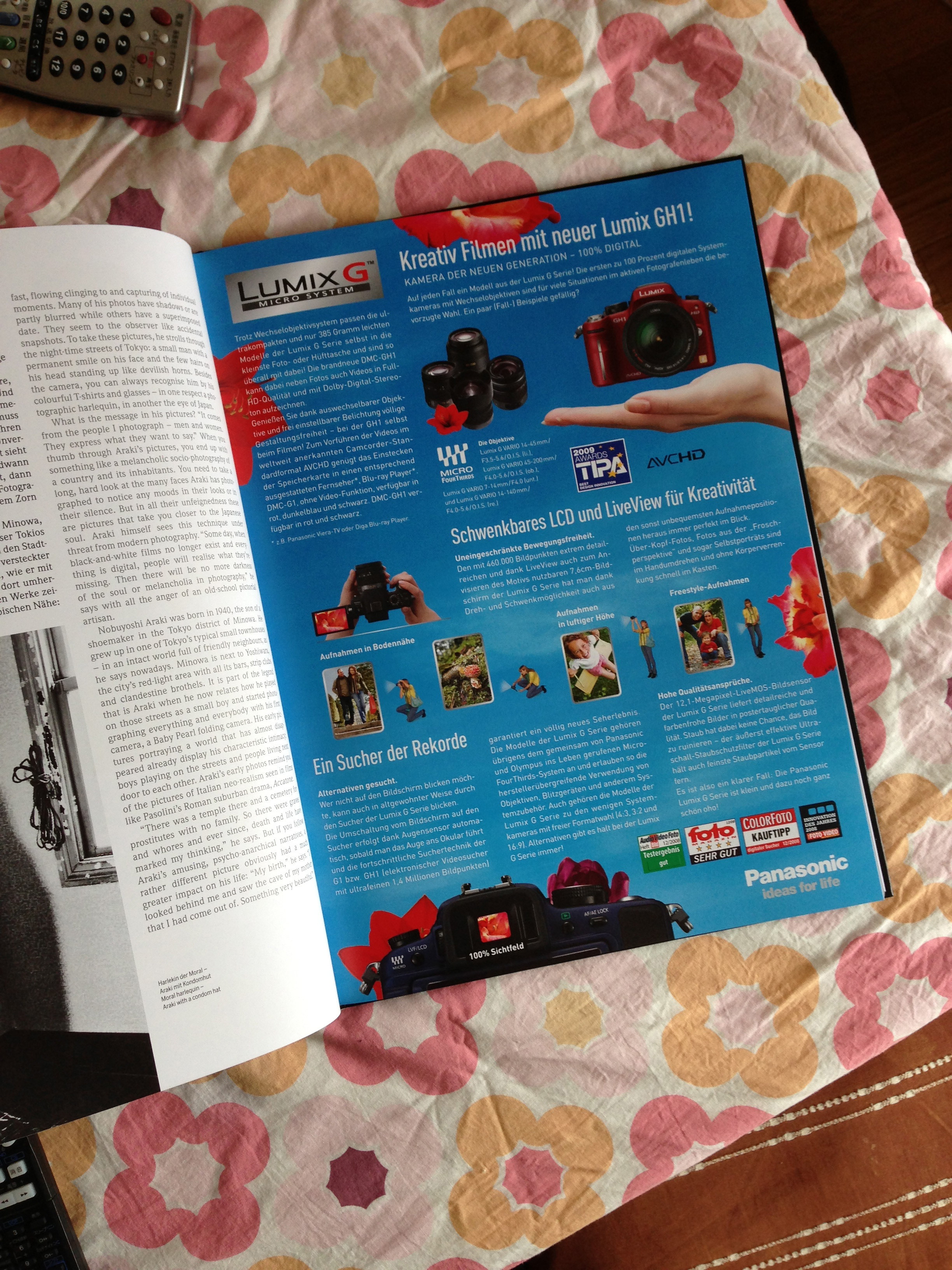
I had my recent WTF moment when I opened “Araki (Portfolio)” which I bought from Amazon. The book has awful Tamron and Sigma ads which feels like someone pouring cold water on you while you are having sex. Ads just don’t belong to art book! You can’t even rip the ads off the book since they are integrated into the pages.

Anyway, the sentence first page by the Stern-Art-Director Donald Schneider kinda made me sad: “It wasn’t that I hadn’t seen any sex, porn or SM photos before…”. It’s obvious that the director himself does not understand the deeper meaning or context of Araki’s work. I don’t know how Araki’s photos are perceived in Germany, it might be something cultural, but they sure didn’t receive this bad treatment in Kiasma in Helsinki!

The other introduction by Jochen Siemens is kinda okay, nice little text to accompany Araki’s photos. There is also a short interview with Araki which is kinda nice.

I regret however buying this book since there are tons of much better publications which portray Araki’s work in more spiritual and sensitive way. I definably recommend to skip this book unless you love ads featuring years old camera equipment.


Magnum Contact Sheets

I recently bought the latest edition of Magnum Contact Sheets (2011, Edited by Kristen Lubben). This (huge!) book is a landmark, perhaps one of the most important photography publications out there.

Contact sheet used to be a common tool for photographers when reviewing their work; it allowed photographers to see a quick overview of the images they had shot. This first draft reveals the thought process and work method of the photographer since the original sequence of the exposed film is preserved.

Indeed, contact print is something intimate that photographers are not usually willing to show. Quoting Henri Cartier-Bresson (from page 18), “A contact sheet is full of erasures, full of detritus”, and that “A photo exhibition or a book is an invitation to a meal, and it’s not customary to make guests poke their noses into the pots and pans, and even less into the buckets or peelings..”.

I wasn’t particularly interested in seeing the mistakes of other photographers, but more I wanted to see the flow of images that existed in original film, I find there is something very beautiful and human in the process and how the mind of the photographer works. A perfect marriage of the analog workflow and human subject..

The book starts with iconic images of Cartier-Bresson in Seville in 1933, and chronologically walks the reader through the century of great photographic culture into the present day. The written stories and descriptions by the photographers themselves are fascinating to read; here are many amazing, moving stories here. I am especially touched about description of Marilyn Silverstone’s life, she was the only woman photographer to record Dalai Lama’s arrival to India in 1959 and became Tibetan Buddhist nun in the later years.

And then there is the iconic picture of the lone protestor in Tiananmen Square.

But Magnum Contact Sheets is not only a record of famous images with historical importance, it’s a record of the art itself. On the latter pages there are even video stills, and screen shots of the thumbnail images on computer screen.

It will be interesting to see how this book will develop in future as more and more photographers switch to digital.

I really recommend this book to anyone interested in photography or the human subject.