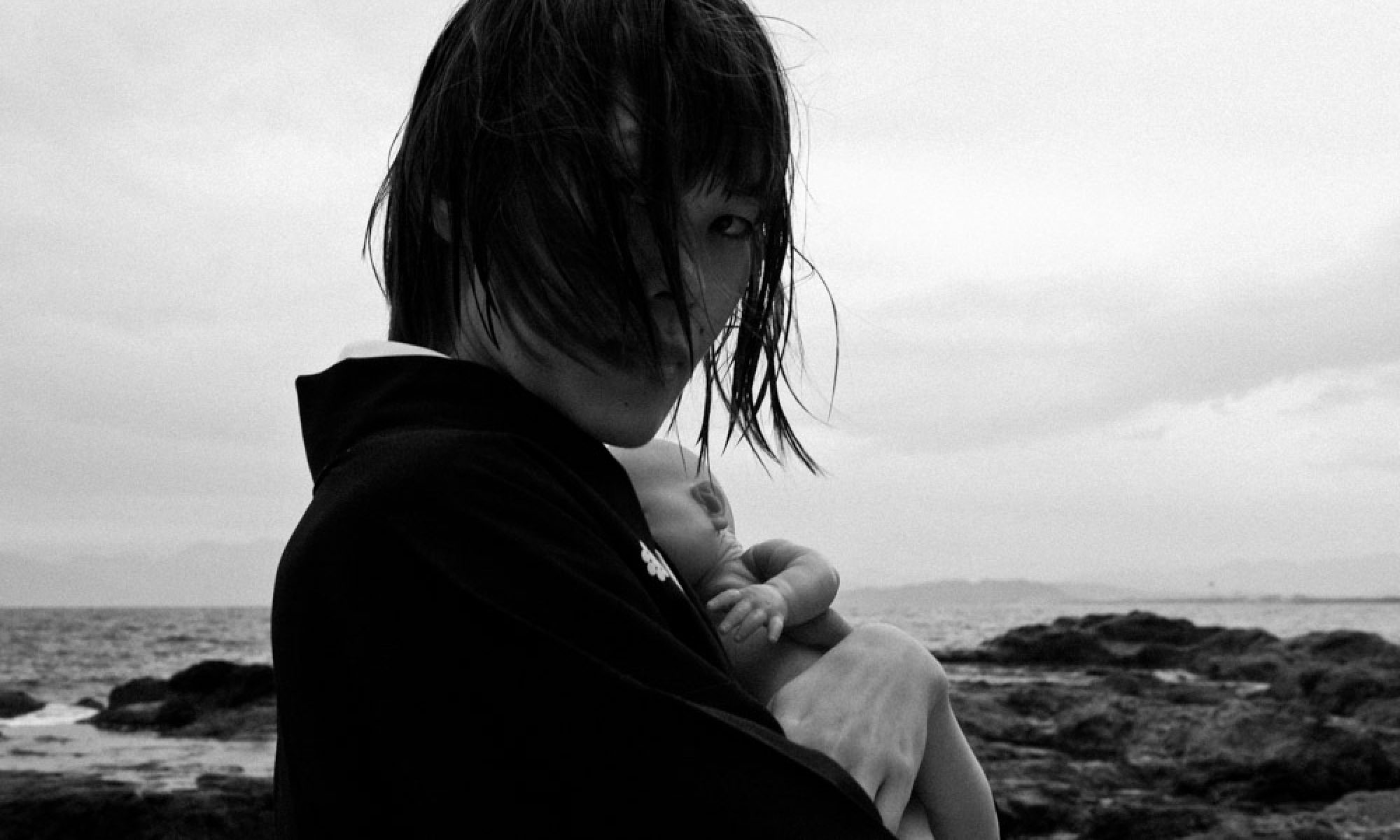
I want to be pushed off the cliff. I want to be destroyed. I want to be burned, crashed, chopped to pieces. I want my rotting body to be fed to vultures. Yes, I want art to make me feel something. I want neurons in my brain to light up. I want fucking voltage!
Araki’s photos are like a woman too beautiful. Like a landscape too distant, like vanishing note of last song you hear, you know, like sigh of a lover just before she reaches orgasm. Photos of Araki reach deep down in you and bring back emotions you had long forgotten. Warm, wet and real.
When I first saw Sentimental Journey in Kiasma, I was almost literally in shock for two weeks. I remember I cried sometimes before sleeping, when I imagined the scenery Araki must have felt in his heart when he saw his cat playing in the snow after Yoko’s death. Such beauty was too much for 20 years old virgin like me. And now I know I’ll never recover.
I feel photo criticism is such a vanity for the most part. Waste of time, almost. It would feel so inappropriate to describe photos by easy words, like in Flickr. It’s like describing Henri’s famous photos in Seville “hey Henri, cool compo”. Moriyama Daido can’t use a complicated camera, but prefers to use automatic point and shoot. Going through his photos and saying “look, the guy knows how to use rule of thirds” would feel so silly, wouldn’t it?
Instead I think it makes sense to describe personal encounter with photographic images since it’s a good context to describe yourself and the moment. Photos shouldn’t have titles because titles make viewer see just that one thing in the photo. Unless, of course that’s what the artist wants. I am more interested about the real person than the photos, maybe.
As Susan Sontag said in her book, camera cannot assasinate. But camera can kind of rape, because it can portray person in a way that cannot be controlled by the subject. Photo can show person in a way he or she don’t want to see him or herself. This is the reason women often dislike their photos picked and selected by photographers, but would rather like to pick the shots they like themselves. It is almost impossible that woman would agree with photographer’s vision of herself. Only models can explore the area away from their comfort-zone, but then that’s kind of their job. Most women want to look beautiful. And honestly, I have no idea what that would mean.
Of course, another factor worth considering is time. I don’t just mean about light and shadow, but I mean the spiritual mood of the subject and photographer. Sometimes there is just right time to take photo of a person, often when he or she is not looking to the camera. To understand and cope with this reality is basically life and death for photographer. Great photographers are kind of invisible, they are just there and people don’t care about them.
I would like to also mention in this context what I feel about posed shots (studio shoots / outdoor shoots with model). I don’t think one should be in possession of a fancy camera to make these kinds of photos. In fact, it is interesting to approach posed shoot with a point and shoot camera in natural light setting. Photos like these must also be natural, while still being obviously planned photos. It’s one of my goals to find the climax point between planning and improvisation. I’m really not such a great planner, as those who have worked with me, painfully know. Definably I want to explore the area of posed photography from now.
This is one of “kakkoii hanashi” ( cool talk) and I’m sorry about that, but I think I’m honest when I say that photography is kind of like sex to me. I want to shoot to know I’m not alone.
With love,
Jaakko