My Shinjuku sunset photo was featured in Getty’s Flickr Summer Japan Collection 2012! Thank you Getty! 🙂
http://www.youtube.com/watch?v=oEIQeeSokGs&feature=BFa&list=UUcIgGcUE-nb1tYKya3Qtp0Q
Because all what we have is now
My Shinjuku sunset photo was featured in Getty’s Flickr Summer Japan Collection 2012! Thank you Getty! 🙂
http://www.youtube.com/watch?v=oEIQeeSokGs&feature=BFa&list=UUcIgGcUE-nb1tYKya3Qtp0Q
I uploaded the collection of Jeju photos in Flickr. I intend to release a photo book later with these photos under the title “Photos from the Healing Island”.
http://www.flickr.com/photos/yaschan/sets/72157630978661750/
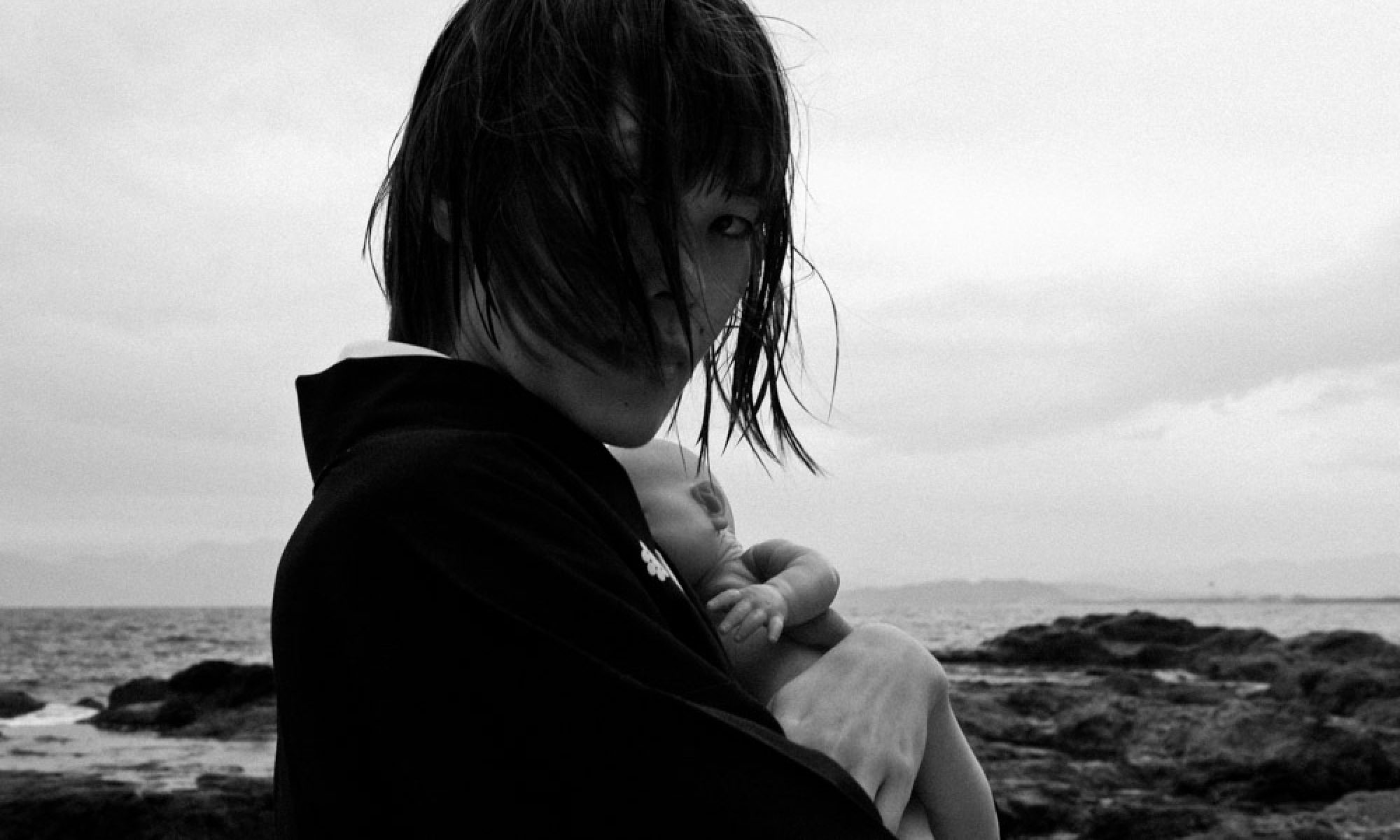
This is the final photo of the series “Island Mother” which we shot in Enoshima in March.
I saw interview of Mattias in Youtube channel of Eric Kim. Soon after that, I decided to contact Mattias and ask for his interview which he kindly granted.
When did you discover photography? Was there a moment in your childhood or adolescence when you discovered that you love taking photos?
I’m a really late bloomer. I actually got my first camera as late as 2006. But visual imagery has always played big part in my life as I studied design and worked as a graphic designer.
In your photos, one can sense solitude or a kind of loneliness. Tell me a little about this and capturing that unique atmosphere.
It is true, at first it was an unconscious decision. But after looking at my work I really found that it reflects me as a person and now it is a very conscious decision in my photography.
How did you meet Eric Kim? Tell me your first impression about him.
I met Eric in Tokyo. I attended a workshop in there that Eric had together with Charlie Kirk, Bellamy Hunt and Afie Goodrich. My first impressions of Eric is that he is a super nice guy, full of energy.
He is a quite unique person, he loves sharing knowledge and is kind of like a Energizer Bunny :D. My friend Brian (Sparks) calls him “Eric Machine”.
This spring I invited him over to Stockholm to hold a four day workshop here, and it all went well. I do not know of anybody who have met him in real life that does not like him. He is a top man!
Tell me about capturing the beautiful photo of Linnea.
I was out shooting with Eric and we talked a lot about projects and the importance of shooting and working in projects. I am currently working on a project with the working title “The Elderly”.
And as we were walking I spotted here from a distance and knew right away I had to include her in the project. So I approached her and started talking to her and asked if I could take her picture. She agreed and I took a total of six shot of her and they where all pretty good.
The amazing thing was afterwards when she told me that I had made her day. It felt really good and totally made my day as well.
How was your trip to Tokyo? Do you intend to return here?
My trip to Tokyo was totally amazing. I love Tokyo! My only regret is not staying longer. I made a lot of new friends and I have every intention on going back as soon as I can.
Many photographers have great images but find arranging them into a sequence very difficult task. Would you have any idea on how to make the process easier?
No, it IS REALLY hard. But my general advice would be to her very hard in your edit and let the edit take bit of time. Also get input from people you trust, and get the input in person not on Flickr. I do not think that feedback on the internet is very useful if you really want to know what people think.
And if you have a set of images I think it is generally good to let some time pass from the actual shooting to the editing. You need time to detach yourself from the emotion that you had when you took the picture. Sometimes that emotion is preventing you from seeing if the picture is good or not.
This emotional attachment is very interesting and quite common with photographers. Do you believe detachment would help? If so, how to achieve detachment during shoot of emotional subject?
I think detachment is important in Street Photography. I´m not sure about other genres. But when it comes to Street Photography, you have to detach your self from your pictures. It helps you being a better editor of your work but it is really hard.
The emotion you feel when you raise the camera and dare to shoot a stranger you never have met before is quite satisfying (or even horrifying), sometimes that feeling and your memory of the moment can be so strong that when you look at the picture, all you feel is that feeling. And that can sometimes cloud the judgment of the actual picture.
In these “Flickr-fav-Explore”-times you can really feel the pressure to get instant feedback, and you quickly upload and just wait for the comments to roll in on your “amazing” picture… And sometimes when you look back on your old pictures you can see that the picture is sometimes not as good as you remembered it to be.
There are some ways of “helping” your self to let your pictures digest. One is to work in time based projects and not look at the pictures at all until the timeframe has passed. Another way is to shoot with film, although it does not suit everybody.
What photo books would you recommend to a person who has no photo books?
I would definitely recommend Robert Franks “The Americans” It is a classic regarding to editing and sequencing a project. It is one of my favorite books.
Thank you Mattias! You can find more about Mattias in his website:
http://longtallswede.com

Yesterday, I found Miyoko Ihara’s photo book “Misao the Big Mama and Fukumaru the Cat”. The photos are unique and heartwarming; I can feel the photographer’s intention clearly; the human connection between the cat and grandma.
In her website she says:
“My grandmother and her cat are always together. This is the photobook captured the everyday life of my grandmother, Misa who bends her self to the fields work with her cat Fukumaru.”
What especially delighted me about this book is what I call a kind of artistic honesty; Ihara doesn’t try to be artistic, the photos are simple captures of real life events, but are exactly that in creative and artistic way. Ihara’s framing and selection of subject feels very profound and honest; it must be the result of her years in Nippon Photography Institute that took her to this level.
Although I understand why some of the photos might be criticized as being a kind of cute, the meaning behind the photos is clear; they are honest description of human connection. Fukumaru is very unique, odd-eyed cat and his partner and the 87 years old grandmother whose eyes show experience of life are naturally suited to each other.
The life of this couple is well captured in their green, lush environment.
It’s remarkable what the photos show if you take a moment to really look at them. Sure they are cute photos, but they are also much more. It is unclear to me at this point whether the photos were taken digitally or with film camera, but in any case, the print is excellent with very rich and saturated colors.
Especially I was moved about the second last photo, a rainbow captured in a very beautiful way.
I highly recommend this photo book to anyone interested in photography.
Find out more about the photo book in:
http://www.littlemore.co.jp/enstore/products/detail.php?product_id=357
Introduction
I have been a big fan of rangefinder cameras since my friend introduced me to his Leica M6 TTL. There is something magical about taking a photo with a rangefinder. It is very different experience. Unlike shooting with SLRs, you can view the scene during the exact moment when you take the photo; there is no mirror blocking your view.
Since I enjoyed the full manual operation of my friend’s M6, I chose the mechanical version of Bessa (the M in the name signifies the manual/mechanical version, R3A has aperture priority and is electronic in operation). You can shoot with R3M even if the batteries die. And even if the in-camera electronics would bite the dust one day, it’s still possible to keep shooting with this camera. I like that principle and I was willing to sacrifice the comfort of aperture priority mode for the sake of full mechanical operation.
Bessa is a popular camera here in Japan for film photographers. I’m not sure if it would be appropriate to call Bessa a poor man’s Leica but it is tempting to compare this camera to Leica M6 TTL since it’s similar in so many ways. I don’t have any information about exactly how popular the camera is, but at least two of my friends have it.
R3M is also a very portable and discreet camera (at least what comes to it’s size), making it a good tool for street shooting. When you hold it to your eye, people won’t get as intimidated as if you are holding a weapon-like SLR.
Today’s Voigtlander cameras are manufactured by Cosina company in Japan, and have nothing (except name) to do with Johann Christoph Voigtländer’s company. Nokton lenses are also manufactured by Cosina in Japan.
Operation
Operating Bessa R3M is comparable experience to Leica M6 TTL. It is a delight to to use and handle this camera and the Leica-like rangefinder magic is fully present. The rangefinder patch is bright even in low-light conditions and big enough for accurate focusing.
Bessa’s 1:1 viewfinder is bright and very easy to use. Since it doesn’t magnify, it allows you to shoot with both eyes open. The camera has 40/50/75/90 frame lines which must be manually set by using the switch. The camera won’t recognize the coding in Leica’s M lenses. Frame lines are parallax corrected just like in Leica and move as you focus.
40mm frame lines are kind of hard to see because they extend so far into the corners, so it might take some getting used to. There are no exact 35mm frame lines in R3M, but setting the camera to 40mm lines and anticipating the 5mm difference might not be such a big deal.
TTL center weighted metering turns on automatically when you press the shutter half way. Unlike in Leica, you don’t need to turn the camera on or off. This is likely to save some batteries. The metering has plus/minus scale of exposure in steps of 2, 1.5, 1, 0.5. It’s more informative than Leica’s simple arrows, because you get instant feedback how much you’re off from the optimal exposure. But this is a matter of taste. I can also understand why many prefer the Leica’s super-simple led arrows.
In my tests, I found the metering to be very accurate.
Bessa has maximum shutter speed of 2000 which is high enough for the most situations, although ND filter might be necessary if you want to open up the lens in bright conditions.
It is true that R3M’s shutter is kind of loud. It sounds like SLR shutter (it actually comes from Cosina’s cheap SLR line). This might become problem if you shoot in quiet places and the shutter sound might be one reason to choose Leica over Bessa, since it’s shutter is much more discreet.
This might also have something to do with the fact that Bessa R3M has dual plane shutter.
Bessa has no timer, but the shutter button accepts a standard mechanical shutter release.
Loading film is also very easy, perhaps easier that it is in Leica. With Bessa you don’t need to remove bottom plate to load film. Just move the switch on top plate back and pull up the film rewinding crank, and the back pops open. The switch on top plate should prevent accidental opening of the camera.
Winding back the film is easy. It requires pressing the film release button on the bottom of the camera and winding the film back to the cartridge with the crank. I would guess that the mechanism is more robust than M6, because the crank is not angled but straight; less mechanical parts.
Build Quality
I found Bessa’s build quality to be very good, if not as rock solid as Leica. The camera is mostly made of metal, except the back door. It feels comfortably solid and heavy, and it has some of that “real camera” feel. The camera feels very well balanced in my hands. It’s easy to carry this camera with one hand, so neck strap might not be necessary.
Shutter button and film forward lever are made of metal as well as film rewinding crank and shutter speed dial and they feel very robust.
The markings on the camera are painted and not engraved on metal (except shutter speed numbers). If one finds the top plate logo annoying, it might be relatively easy to remove it.
I have read some reports of small screws of the bottom plate becoming loose, so it might be good idea to check their tightness every now and then. But overall, if you want better build quality than this in a film rangefinder camera, Leica is the only option.
The strap connectors are positioned strangely a bit on the front side of the camera, so the camera doesn’t quite hug your body while you’re carrying it, but makes the camera’s lens to point to the sky in 45 degree angle. Although this camera has a double focal plane shutter to prevent damage from the sun, I would recommend caution. Strangely the weird positioning of the strap connectors seem to highlight this risk. My recommendation is to either use lens cap, or carry the camera so that lens faces your body in sunny days, like most pros do with their RF cameras.
Overall, it must be said that Bessa is a solid and very well built camera.
Conclusion
Bessa R3m is a reasonable cost alternative for Leica, plus it accepts all wonderful Leica’s lenses (but has no built-in 35mm frame lines). Bessa R3M with Nokton 40mm lens might be good option for those who want to try manual rangefinder photography for the first time. It’s also generally good idea to invest into M-mount lenses; should you upgrade to Leica one day, you can still use the same glass.
R3m offers full manual shooting experience. The camera is mechanical and only electronic part of the camera is the metering which can be turned off by removing the batteries.
The photos I took with 40mm 1.4 Nokton lens compare very well against the shots I took with Leica M6 TTL, they are similarly crisp and sharp, but that should be mostly if not entirely due to the lens and film.
The size of Bessa makes it also very portable. The camera is almost as small as Fujifilm X100, although almost twice as heavy. I personally like the reassuring weight of this camera, which makes it to feel like a solid tool.
I really recommend this camera for anyone who wants to get into the wonderful world of rangefinder photography, but are on a budget or hesitate to invest into Leica.
See the gallery below for my shots with Bessa R3M and Nokton 40mm 1.4 lens.
Embassy of Finland in Tokyo is so cool!
The bird asks the frog,
what do you know about flying,
about the way how wind can hurt?
This is for the toad that we remember,
when our webbed feet bleed
for the person who locked his door
with his empty words in North Point
For the hope that exists in the world of no hope,
I say no more
until my son meets his frog
Leica’s M8 used to be a camera that I never really had interest to. Crop sensor, infrared issues (requiring filter) you know, it was Leica’s first attempt to make a digital camera and I read many negative reviews about it.
I just thought that I would rather go for M6 and get a full frame camera via 35mm film and be happy for the rest of my life.
But now, since M8’s price came down (in fact you can get used M8 with around same cost as Fujifilm X-PRO) I find myself attracted to this camera. M8 is less than half the price of M9, and still it is a real rangefinder Leica, and accepts all the great optics.
The shortcomings of the M8, such as poor JPG’s, requirement of infrared filter, and the crop sensor, doesn’t weight so much in my scale. For me I care much more about the spirit of rangefinder focusing, feeling connected to the scene you’re shooting.. and of course, the culture of manual photography which is so genuinely embraced by Leica.
今日の夜10.00からUSTREAMやります。カメラの話.
I’m on USTREAM tonight from 10.00PM JST (UTC +9 hours) talking about cameras we use.