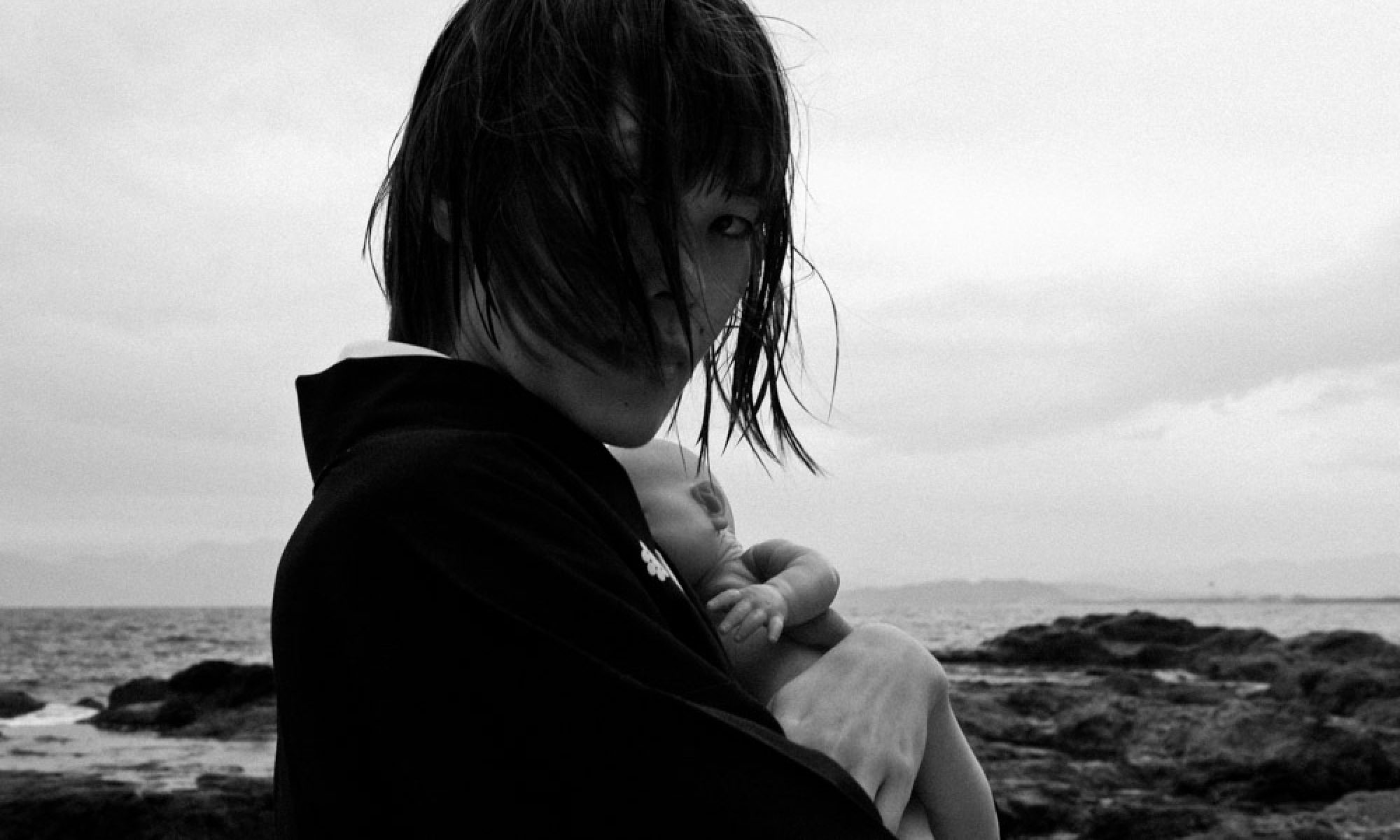
I had pleasure to shoot bariton Masato Inoue some years back. This photo is one of my favorites from that session.
People by Jaakko
My second photo book “People by Jaakko” will be available soon. These are my recent portraits, almost all are shot this year. Although the book is only a narrow selection of the portraits I’ve shot recently, I feel a kind of nice coherence in this selection. I think I have reached a kind of special turning point in my voyage as photographer, so to celebrate that, I decided to make this book.
Portrait photo books are often large and impractical to carry. But this book is only about A5 size, so it’s pretty portable. I like the form factor as a photographer. It’s not large, but large enough to carry the message.
This book will cost 2000円 (about 20USD) and will ship worldwide. This will be available from next week.
Dance Dance Dance
たぶん、ダンスと写真似てる。カメラのつかいかたとか、カメラのしゅるいとか、まったくかんけいない。ダンスするときこころがもえる。見えないものがでてくる。写真とるときもいっしょ。生きてる気がつよくする。そのために写真とる。
I thought tonight, maybe dance and photography is similar. Level of skill or type of camera is irrelevant. Soul burns when you dance. It’s expression of what’s normally invisible. It gives strong sensation of living. This is reason why I photograph.
Door of Perception
More than I like Shinoyama Kishin, I like Moriyama Daido. More than I like Moriyama Daido, I like Araki.
Then I seem like I am breathing the soul of Japanese editor Kazuo Nishii whose documentary “Letter from yellow cherry blossom” I saw in Finland. Many years ago!
Photograph is a door of perception for me.
It makes me feel alive
Can I take your photo?
Regarding Photography
People in Tibet think body is only a container, like a vase. When I take photo of a person, I never look at the vase. I want to see and feel what’s inside. It is my way to take photo, and I don’t think I could ever do it differently.
Like I watch photos and you
I want to be pushed off the cliff. I want to be destroyed. I want to be burned, crashed, chopped to pieces. I want my rotting body to be fed to vultures. Yes, I want art to make me feel something. I want neurons in my brain to light up. I want fucking voltage!
Araki’s photos are like a woman too beautiful. Like a landscape too distant, like vanishing note of last song you hear, you know, like sigh of a lover just before she reaches orgasm. Photos of Araki reach deep down in you and bring back emotions you had long forgotten. Warm, wet and real.
When I first saw Sentimental Journey in Kiasma, I was almost literally in shock for two weeks. I remember I cried sometimes before sleeping, when I imagined the scenery Araki must have felt in his heart when he saw his cat playing in the snow after Yoko’s death. Such beauty was too much for 20 years old virgin like me. And now I know I’ll never recover.
I feel photo criticism is such a vanity for the most part. Waste of time, almost. It would feel so inappropriate to describe photos by easy words, like in Flickr. It’s like describing Henri’s famous photos in Seville “hey Henri, cool compo”. Moriyama Daido can’t use a complicated camera, but prefers to use automatic point and shoot. Going through his photos and saying “look, the guy knows how to use rule of thirds” would feel so silly, wouldn’t it?
Instead I think it makes sense to describe personal encounter with photographic images since it’s a good context to describe yourself and the moment. Photos shouldn’t have titles because titles make viewer see just that one thing in the photo. Unless, of course that’s what the artist wants. I am more interested about the real person than the photos, maybe.
As Susan Sontag said in her book, camera cannot assasinate. But camera can kind of rape, because it can portray person in a way that cannot be controlled by the subject. Photo can show person in a way he or she don’t want to see him or herself. This is the reason women often dislike their photos picked and selected by photographers, but would rather like to pick the shots they like themselves. It is almost impossible that woman would agree with photographer’s vision of herself. Only models can explore the area away from their comfort-zone, but then that’s kind of their job. Most women want to look beautiful. And honestly, I have no idea what that would mean.
Of course, another factor worth considering is time. I don’t just mean about light and shadow, but I mean the spiritual mood of the subject and photographer. Sometimes there is just right time to take photo of a person, often when he or she is not looking to the camera. To understand and cope with this reality is basically life and death for photographer. Great photographers are kind of invisible, they are just there and people don’t care about them.
I would like to also mention in this context what I feel about posed shots (studio shoots / outdoor shoots with model). I don’t think one should be in possession of a fancy camera to make these kinds of photos. In fact, it is interesting to approach posed shoot with a point and shoot camera in natural light setting. Photos like these must also be natural, while still being obviously planned photos. It’s one of my goals to find the climax point between planning and improvisation. I’m really not such a great planner, as those who have worked with me, painfully know. Definably I want to explore the area of posed photography from now.
This is one of “kakkoii hanashi” ( cool talk) and I’m sorry about that, but I think I’m honest when I say that photography is kind of like sex to me. I want to shoot to know I’m not alone.
With love,
Jaakko
Regarding New Documentary Movie
When I talk about documentary film, I don’t mean a movie which simply describes or tries to analyze something. The movie I make is not objective, but extremely, and honestly subjective. I have no intention of making another NHK documentary, trying to analyze and break things apart. Instead I just want to tell truth.
In Japan, society has many invisible rules, and people don’t normally talk about their emotions. These rules of society are taught to the children since their birth. For example that it’s unacceptable to cry or laugh in public. If you ask children if they like their parents, most of them won’t say they do. People think it’s natural. Why?
Children are supposed to go to kindergarden, and all kinds of schools after that, as long as they are not home. To say “I want to walk through my life, my child by my side”, for example, would sound strange. Why?
Your child is like a god. You can learn many things from him. He is you. Of course, you want to spend as much time as possible with him. Who wouldn’t want to spend time with god?
I believe that the present day loneliness is a situation produced by the society. This theme was well described in Naomi Kawase’s Moe no Suzaku. This movie is a story of me and my son, and a kind of separation. Not only separation that takes place every day when I take him to the kindergarden, but also separation that I feel as a human. So in fact, this is a personal matter.
Why I make documentaries?
Why I make documentaries? This is one explanation.
Arura Movie Ep.5
Here it finally is. Entire Episode 5 from Arura with English subtitles. This is independent film I made in autumn 2007 with my great friends and comrades. The final version was released in January 2008. This is the last episode of the film.
Introducing: Jinmo
Now with English subtitles.