Buying a Camera

As a professional photographer, the most asked question I get might be, “what kind of camera should I buy”. A friend recently presented me this question, and opportunity to consider.

I strongly believe joy of photography is never about the  camera. Araki said once that if taking a photo is like writing a love letter, any camera will do. When you have passion, you use whatever you have at your disposal, it doesn’t matter if it’s ballpoint pen or pencil.  There is a rumour that famous Japanese photographer Moriyama Daido has never even bought a camera, but used compact  cameras presented to him by his friends.
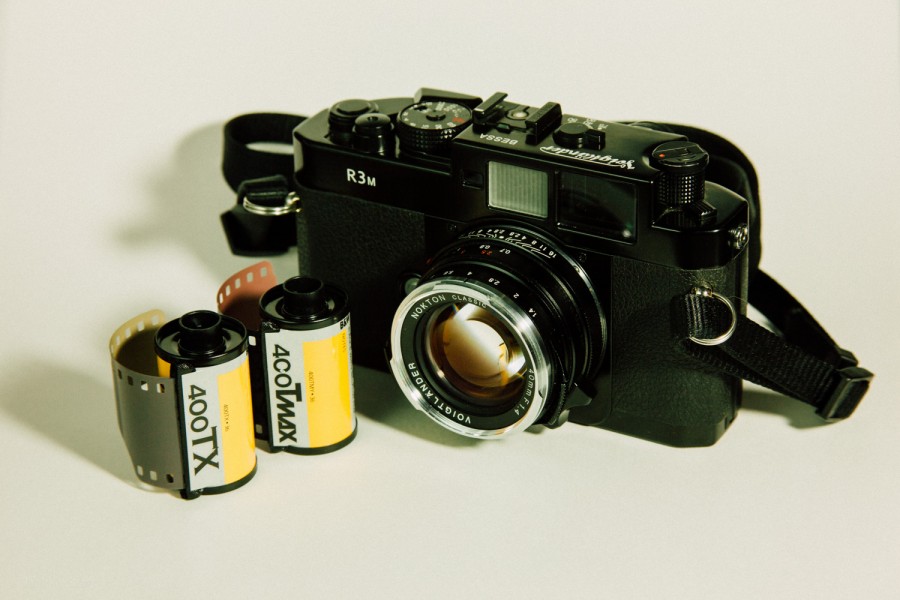
bessar3m

I generally recommend people to avoid buying too expensive gear, whether analog or digital. The friend I mentioned was wondering whether he should get one with full frame sensor or not. Indeed it’s tempting and  I have been weak for this temptation too. Seeing the specs of latest and greatest full frame cameras crop sensor feels like a compromise. Same thing happens with film rangefinder cameras, Bessa for example seems like a cheap clone of Leica, lacking the same historical magnitude and “properness” of the “real thing” despite the fact that they use same mount and can even use same lenses.

It’s tempting to think that having such great (or even legendary!) camera at your disposal might inspire you to take more pictures. This is a common illusion. I would propose that having too expensive camera might kill the very joy of photography; guide you to the wrong track. Eric Kim wrote excellent piece on GAS, Gear Acquisition Syndrome.  Please read it before you invest money into expensive camera.

But for sure in world of digital photography, there must be a difference in image quality of cameras? There are, and each camera has their own feel what comes to colour reproduction and fidelity. But no matter how you put it; all digital cameras that are sold nowadays have a ridiculously good IQ. Heck, even iPhone can take photos that have ridiculously good image quality.

But… for sure cameras are beautiful objects with stunning cultural value? Especially that Japan Camera Hunter Leica M3 which is in perfect mint condition, or perhaps some brass showing underneath.

Well, let me ask you this, are you willing to take that mint camera with you when you go hiking? A bear might eat it! You might accidentally pee on it. Or what if it gets stolen? Will you be able to replace it? In the contrary to urban legend, even professional photographers do occasionally drop their cameras.

Instead of keeping it with you, would you be more likely to leave the expensive camera in it’s padded expensive box, tucked in the safe corner of your bookshelf?
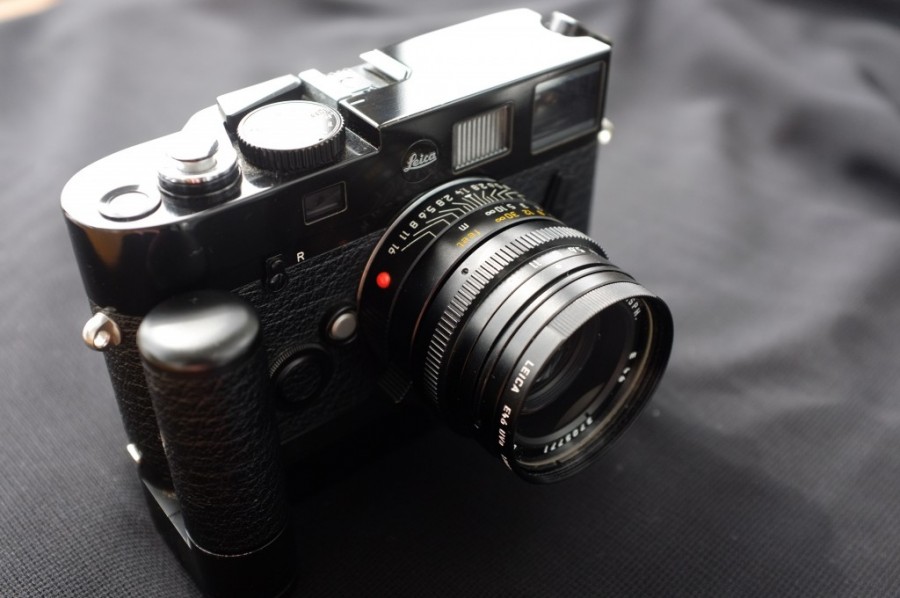
DSCF2372-1024x680

I do not know the answer to that question. But I have borrowed my friend’s rare copy of Leica M6 with a brand new lens, protective UV filter on it and all. It was some sort of rare collector’s edition. My friend didn’t want me to use a neck strap because the strap might scratch the camera.

As you might expect I did not take very many pictures with the camera. I was afraid to even point my eyes on that thing for too long.

I would like to approach the problem from purely practical standpoint.  What will you shoot and in what kind of lighting conditions?

Digital Camera Recommendation

It seems like the megapixel race has calmed down somewhat during the past years but I’ll write this; digital camera megapixel count and actual resolution are different matters. Often a camera with smaller megapixel count might even do better and achieve a better image quality. This was the case with EOS50D. The increased megapixel count versus the previous model EOS40D worsened the image quality somewhat and caused some softness to the images. I would even argue that images taken with my X100 allow to be further enlargements than ones with my 50D despite the fact that 50D has larger sensor. I would argue that megapixel count is a minor factor to consider, unless you plan to make very large prints.
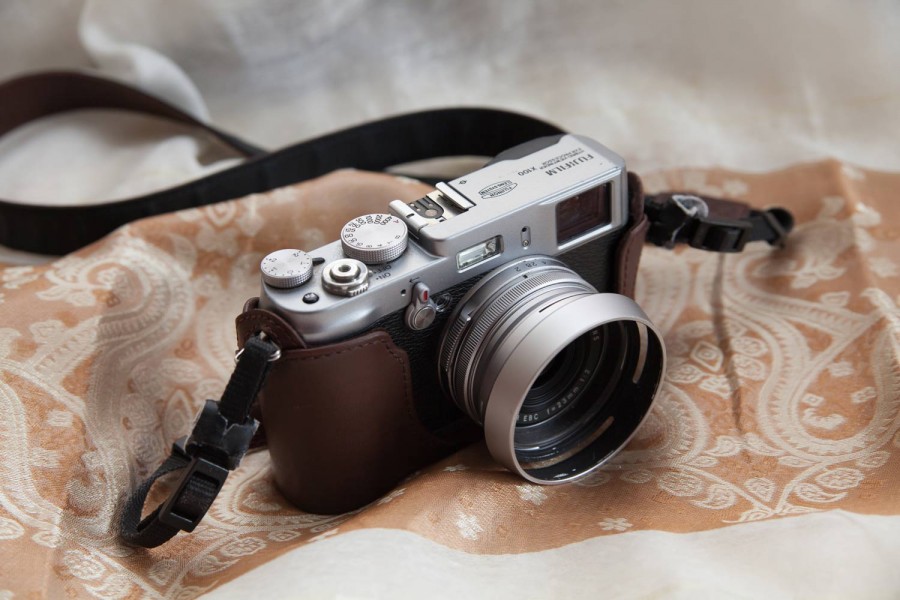
Fujifilm Finepix X100For someone new to photography, I would recommend Olympus Pen series, or other mirrorless cameras that allow you to change optics, such as Fujifilm. Having at least one prime lens (a lens with fixed focal length) is a great way to get accustomed to good photographic techniques such as zooming with your feet and getting more connected with your subject. Prime lenses are also sharper. Normal lens range (50mm) is a good starting point.

If you are OK with a fixed lens camera, there are great cameras such as later Ricoh GR and Fujifilm X100 series (get the upgraded models with S or T in them). I personally love my Fujifilm X100 and it’s hybrid viewfinder.

Those shooting bands in nightclubs (or black cats in coal mines) I would recommend SLR combined with a fast lens, at least lens with F2.8 aperture.

I would not buy a digital camera by Leica.

Film Camera Recommendation

Those who are into film photography get a real treat these days. Old film SLRs by Nikon for example are great cameras and they can found stupid cheap. (These are full frame cameras too, you know.) They also offer nifty features such as split image focusing using same technique as in rangefinder cameras.

Those looking for compact camera, I would recommend Fujifilm Klasse W, Fujifilm Natura, or Contax Tvs II.

Rangefinder cameras are also fascinating and there is huge appeal to them as they allow more intimate feeling of taking a photo. Leica’s M series are legendary cameras and if you have the money to get them, they will last you a lifetime. I personally love my Bessa R3m and I have nothing bad to say about it; for me it’s just like using a Leica. I have shot tons of Tri-X and Ektar with it.

Truth about film cameras is that there are a lot of them lying around someplace. Perhaps your father or mother has one hidden somewhere in the family cupboard. To experiment with these cameras can be exciting.

Conclusion

Spending time in gear forums and comparing different cameras is all time spent not taking photos. Think about buying a camera as long time commitment; as something that will be your special partner for long time. Use what you have, and take a lot of photos. No matter how great camera you acquire, you can’t take it with you after you die.
Belkin Qode Thin Type Keyboard Case

I bought Belkin Qode Thin Type Keyboard Case for iPad Air. I came to conclusion that my Macbook Pro 15″ is too much to carry around all the time, especially since I often take my son to kindergarten and have a lot of other things to carry around every morning. But then I very much need something to help with typing with when I’m outdoors.

I’m positively surprised. Although the experience of typing with this is not as comfortable as with my Macbook Pro it’s way better than with touch screen. The layout of the keys is clearly designed mac users in mind. It’s nearly perfect in fact, except the colon key which is relocated near spacebar; this will take some getting used to.

The upper row of keys from left to right have home screen button, lock screen button, app switching button, keyboard shortcut, screenshot button, three mysterious buttons that resemble ancient portable TV (what are those things?), music play controls and volume controls, and pair button(1). When placing the iPad on the groove, the on screen keyboard automatically slides away, but can be summoned by using the keyboard button. The keyboards can be switched on the fly by pressing fn + the colon key which takes some getting used to as the language can be changed only by repeated presses, not by arrow keys although the list style suggests so. (2) Siri has it’s own shortcut key as well between the fn and option key. (3)

The combo of iPad and Bluetooth keyboard is a well working package. Apple has clearly designed iPad for this use scenario in mind. When typing, the on screen keyboard slides away from the view. Selecting text and copy&paste works just like when using mac and it’s possible to jump words and paragraphs by pressing option key plus arrow keys. Even command + z works for undo.

I notice my fingers fumbling around for the nonexistent trackpad and then I intuitively tend to touch the screen which brings the screen obscuring on screen keyboard. Eventually my nervous system will get used to navigating with option + arrow keys which is a good thing even when using real computer. It is quite interesting phenomena psychologically. This combination might change my way of working for the better actually.

Indeed it is very exhausting to reach for the screen; it breaks the concentration. A lot has been written about the ergonomics of this type of setup and I can really second that. When our hands and fingers are resting on one plane it does feel strange having to move them to the other. When using iPad alone this doesn’t matter because we are handling the device anyway and our mind is in that kind of space. But typing on keys and then taking our hand off from the surface and reach to another tangent, it just doesn’t feel natural. This might be the reason why there are no touch screen Macs.

However, with a little practice it’s easy to get used to the handy keyboard shortcuts.

The keyboard also works when placing iPad vertically in the groove. (4) However the vertical orientation somehow just doesn’t feel right for me, especially when using earphones, since the cable will be getting on the way, a lot. The horizontal position instead is a sweet deal, the earphone jack is positioned on the lower corner, volume controls and the orientation lock/mute switch are nicely on the top.

[vc_separator type=’normal’ position=’center’ color=” border_style=” thickness=” up=” down=”]

Notes:

  1. I didn’t need to use the button; I just selected the keyboard from the settings app, no pairing was necessary.
  2. Typing Finnish is possible with this keyboard although it took me a while to realize that ö is next to the space bar since it’s the colon key in the US layout.
  3. I can’t see myself ever using the siri key.
  4. The button which turns on the keyboard is in the center; placing the iPad exactly on the center might be a bit unreliable because the button will be exactly on the same position as the lighting port connection; therefore the button might not be pushed properly. So it might be necessary to offset the device a bit.
  5. Finally : As I was typing this (with the keyboard) I ran into the super ridiculous issue with the under-finger-loupe thing as I was selecting piece of text with my finger (I still don’t remember that I could just easily move around with arrow keys). The loupe behaved as if the iPad was in portrait orientation. Complete madness.

Nikomat EL

I was making some prints in Photo Kanon  today and I found interesting camera on the shelf. They had Nikomat (Nikkormat) EL and Nikkor 50mm 1.4. It looked brand new, like it had just came from Nikon factory. So I asked how much it was, and I was surprised, only 18,000 yen. The meter works, and it even came with new battery.

I’m not very interested about cameras. Especially digital cameras. They release new ones every year and new cameras take cleaner and cleaner images and pack new features. They are like miniature computers. The whole race for convenience turns me off.

But Nikomat! This camera was made before I was made! They produced these in Japan from 1972 to 1976. There is something that genuinely attracts me with really nice objects like this. It feels like a real tool which has a story.

I shot a roll of Lomography 400 with my Nikomat this afternoon and I really love to shoot with this camera. My Bessa R3m feels like a plastic toy after I hold this brick on my hands. It’s obvious that this camera is made to last.

Metering is nicely implemented, and is really easy to get used to. I didn’t try to shoot with aperture priority mode yet since I’m really used to shoot full manual. Downside with this camera is that if battery dies, you can only shoot with 1/90 (unmarked shutter speed), since the shutter speed js controlled electronically. That would mean ND filters if shooting outside. Battery is, by the way located under the mirror! At least you won’t lose battery door..

This is SLR all right and focusing is very different than with rangefinder. There’s no autofocus. But also it feels kind of refreshing to see exactly the image I’m going to capture, through the lens. I’m so used to shoot with my rangefinder. And this can focus closer than Leica.

Shutter is kinda loud that is to be expected from SLR.

The Nikkor 50mm lens is a big question mark for me. I have never shot with Nikon lens but this is as wide as 1.4 so it should be really nice lens for indoor photos. My Nokton 1.4 lens is very contrasty one, so I do hope Nikkor would offer a bit more gentleness what comes to contrast. I will develop my first roll tomorrow, so we’ll see.

I will write a complete review of this camera after I get acquainted with her more.

Fujifilm EF-20 flash for sale

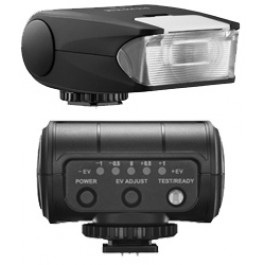
ef-20

I’m selling my Fujifilm EF-20 flash. I’m asking 6000円 plus shipping. I can send it to you. This flash has seen a little use and is in good condition.

The flash should work with these cameras:
FinePix X100 / SL300 / SL305 / SL280 / SL260 / SL240 / HS30EXR / HS33EXR / HS25EXR / HS28EXR / HS20EXR / HS22EXR / FUJIFILM X10, FUJIFILM X-S1, FUJIFILM X-Pro1

Summer Moment

I took this photo using iPhone5. I am surprised how good and natural the colour saturation is in this image. It’s in fact amazing considering that this was taken by a phone.

I had to hold my hand to block the flare since sun was shining to the lens from about 45 degree angle, without my hand the flare was unbearable. Maybe I could construct some kind of portable hood for iPhone?

I just love Finnish summer nature. Since I’m kind of foreigner here now, I can really enjoy shooting like a tourist..

Year with Bessa R3m

It wouldn’t be understatement to say that Bessa R3m is the best camera I have ever owned. The overall feel and response of the camera is just exactly what I like, the manual operation feels like Leica, and Bessa is a real rangefinder.

There’s something special what I really like about rangefinders, it’s that special connection you can make with the scene when focusing manually, and there’s no distraction, no mirror blocking your view on that decisive moment.

I have shot over over hundred rolls with this camera, which isn’t awfully a lot I admit, but it’s still quite much for me. I have shot T-Max, Tri-X, Ektar, Lomo and Fujifilm. I have shot in three continents, in freezing winter and in humid ocean environment. Not yet there has been camera malfunction of any kind.

It’s remarkably easy to load Bessa, and the mechanism is near flawless. It could be even argued to some degree that this camera is easier to load than Leica M6, the film rewind crank is straight and thus simpler than angled crank in M6. Sometimes however the tiny crank somehow lifts itself up; and when this happens the film forward lever stops working, it kind of jams, and usually when this has happened, there’s slight variance in empty space between exposures in frame, nothing much to worry, but can cause a bit headache when scanning negatives.

So far, my R3m has held up the test of time well. The rubber covering is coming off a bit, but can be fixed easily with glue. Viewfinder cover glass thing (Nikon’s one will fit) has fell of twice and I’ve just bought the replacement one from Yodobashi.  Vertical alignment  was a bit off since I purchased the camera, but it haven’t got any worse since then.

I also like the meter which automatically turns itself off after use. This is advantage over M6 since there’s no way to forget to turn off the camera, just to find out that the batteries have drained overnight. The metering is nicely made, and feels just right, since it shows the numbers in plus and minus scale.

The controls of R3m has became my second nature, in fact so much that whenever I pick up my X100, I feel strange. Nokton 40mm lens is amazingly sharp and has that lovely bokeh. For me it’s hard to tell difference between photos shot by this camera and those taken with Leica cameras equipped with expensive Leica glass.

Only thing what has bothered me several times is the shutter sound which is indeed a bit loud. And well, it doesn’t sound as cool as Leica’s amazing pleasant click. The shutter of R3m comes from Cosina’s cheap SLR line, so it just can’t match the German precision engineering, but it works, and it has double structure which is designed to minimize the risk of sunlight damage to the curtains. I don’t know exactly how this works, but it’s supposed to be more durable.

Otherwise, I really recommend Bessa R3m for everyone interested in Rangefinder shooting, it’s good idea to invest in Bessa body and invest in Leica lenses. When necessary, one can always switch to Leica M series body.

Read my in-depth review of Bessa R3m here.

Fujifilm Off Camera Flash

I bought recently some flash stuff for my EOS system, and one of them was the Off-Camera Shoe Cord OC-E3 which is notoriously expensive piece of wire. When I got my Speedlite transmitter to my Canon this became pretty much obsolete, so I tried it to my Fujifilm X100 and the cheapo EF-20 flashy and it works! This will stay in my bag with X100.